Venice – From John Ruskin

VENEZIA – From JOHN RUSKIN
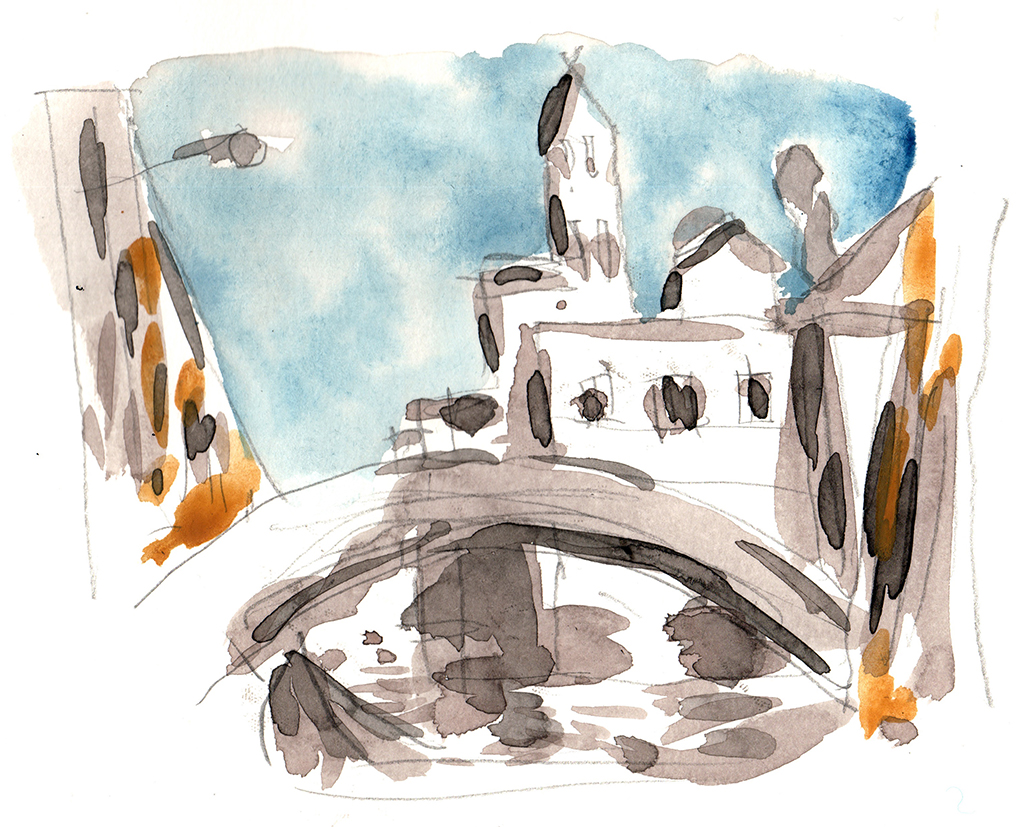
pencil and watercolor
13 x 10,5 cm
2026

A watercolour painted quickly in Venice, in front of the Ponte dei Pugni, from a sketch by John Ruskin.
Ruskin, as can be clearly seen, was also on a gondola and therefore his viewpoint was very low, much lower than the view usually enjoyed by those walking on the fondamenta.
I often use this drawing in my drawn art history lessons for this reason. The point of view is important. Observers in the past were different from us, and if it is true that space is produced by the observer, Venice is a place that allows us to reflect on this concept.
Like Ruskin, whom we imagine sitting in a gondola with a sketchbook and the minimum tools needed to paint his watercolours, or using only a pencil in three colours: a bluish grey, blue for the sky (created using the wet-on-wet technique) and a few touches of orange-ochre.

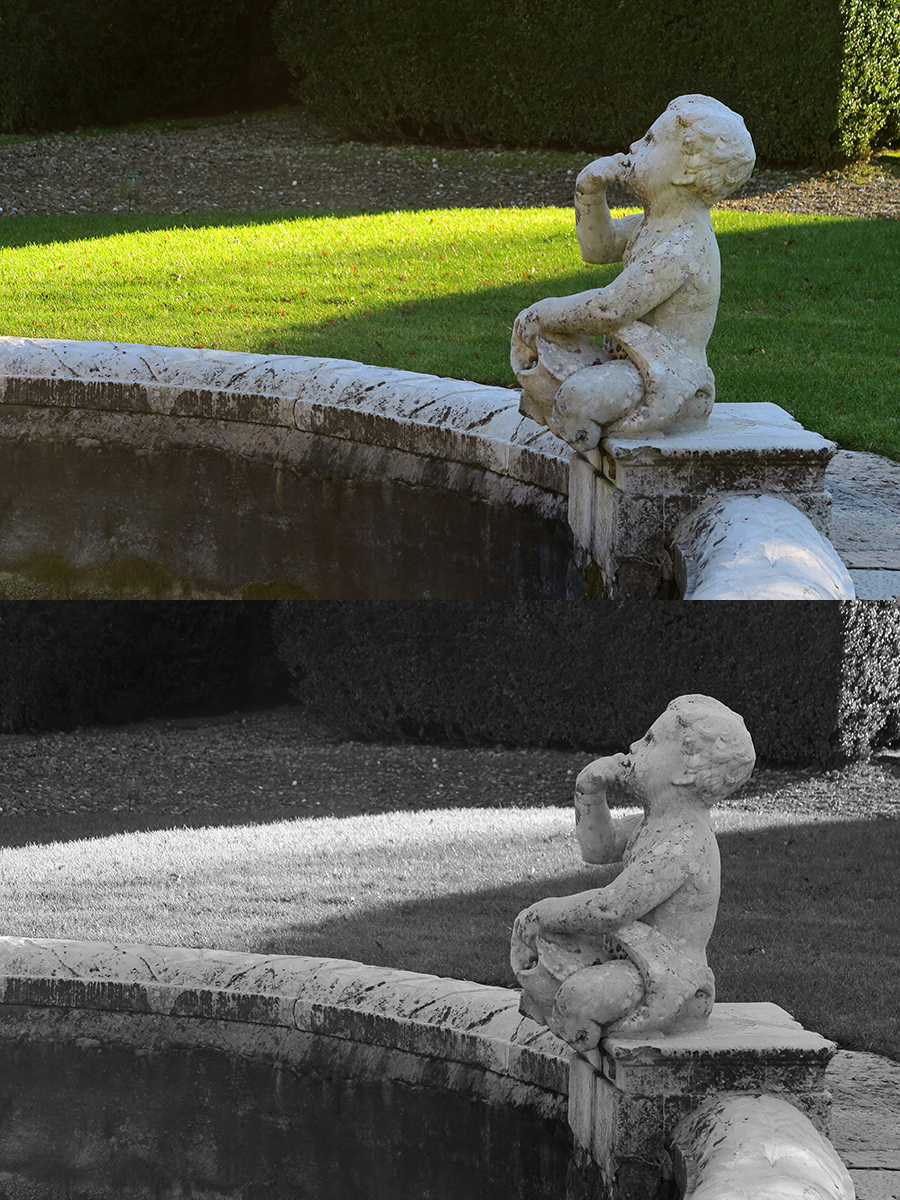
VALSANZIBIO MONUMENTAL GARDEN

previous arrowprevious arrow
01-doppia
next arrownext arrow

VALSANZIBIO MONUMENTAL GARDEN
Photographs
Digital retouching
2025


For this new year, I intend to work on image composition, not only in terms of geometry and balance, but also by exploring light and colour. That is why, on a beautiful day in December, I was able to visit this beautiful garden, which is over 350 years old, at my leisure and take some pictures.

It is a place designed as an allegorical walk to convey a positive message to visitors, of a life where difficulties are faced and where there is always a solution, a life where it is good to stop and meditate from time to time, a life where time is precious and should be lived intensely, with joy.

It was built between 1665 and 1696 by one of the richest and most important Venetian families, the Barbarigo family, as a vow to defeat the plague of 1630/31.

In this garden there is a boxwood maze over 400 years old, probably the oldest of its kind in the world, and there are boxwood walls up to 5 metres high, unique in the world. There are trees ranging from 300 to 900 years old, centuries-old specimens from four continents (Asia, America, Africa and Europe).
The intention of the owners, the Pizzoni Ardemani family, is to protect and preserve this historical, artistic and botanical heritage.
Visitors and companies who come and will come to Valsanzibio provide concrete and valuable help in maintaining this World Heritage Site.

(Text: partly from https://www.valsanzibiogiardino.com)
Lions of war and lions of peace

My friend Christophe Austruy says it well, that the figure of the lion of St. Mark in Venice reflects a powerful and warlike character.

Venice’s political and military power (…). The traditional image we have of the lion is in profile, holding an open book. A beautiful, strong, muscular lion… . There are, however, many lions at rest or asleep, like the one sculpted by Canova in the Accademia galleries.

Monumento a Papa Clemente XIII – Leone Dormiente
Antonio Canova – 1784

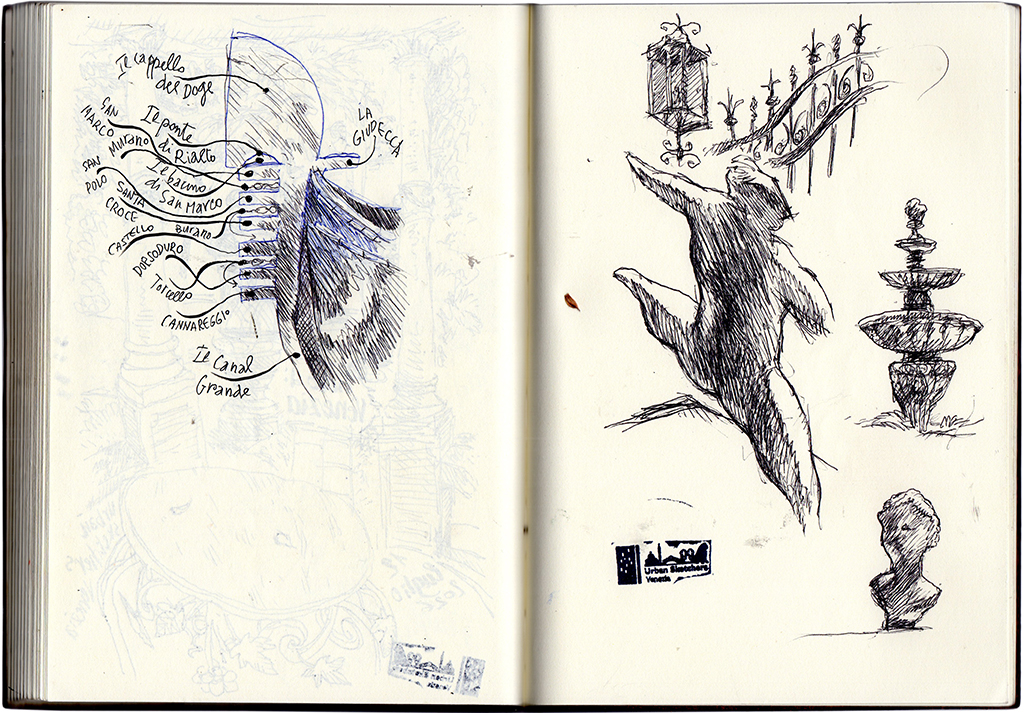
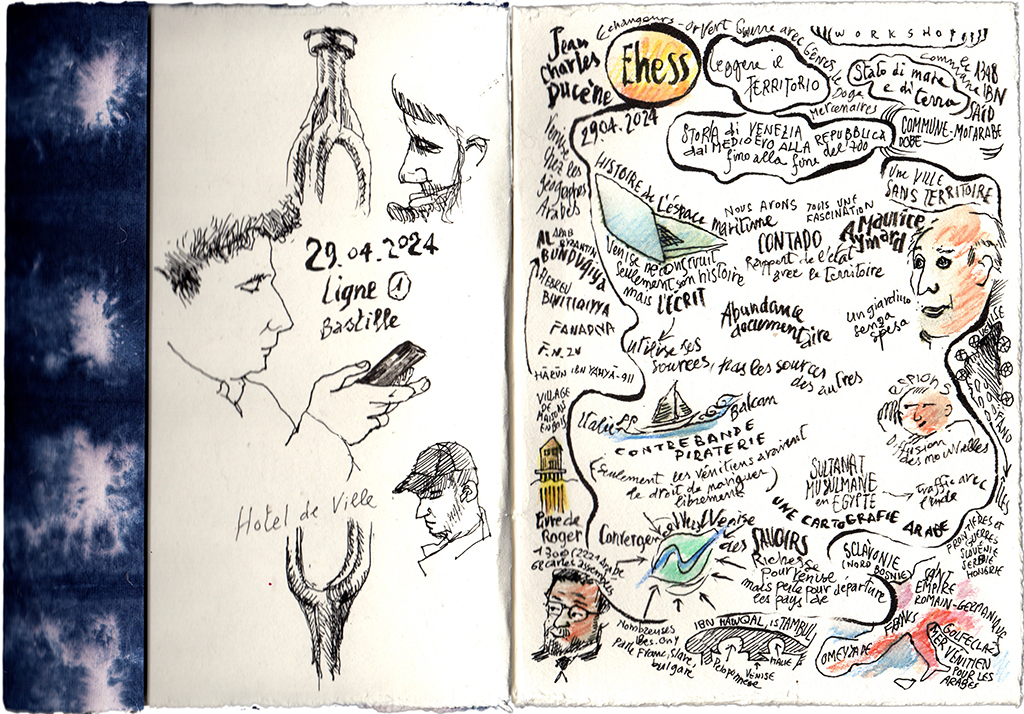
I, too, was inspired by this peaceful, but always alert, version in my sketchbook made at EHESS – Ecole des Hautes Etudes en Sciences Sociales last year and which I am preparing for an edition. 

Stefano Zago
fron the EHESS sketchbook – 2025

It will be the theme of war and peace, so topical and dramatic, that will engage us for the next year of research. For my part, I will continue to experiment with my research model by drawing the images that we will be analysing together.


*Questo leone dormiente fa parte del progetto di monumento che poi fu realizzato in San Pietro a Roma.
Dettagli
Titolo: Monumento a Papa Clemente XIII – Leone Dormiente
Creatore: Antonio Canova
Data: 1784
Data di creazione: 1784
Materiale: gesso

*Image: Gypsotheca e Museo Antonio Canova

EHESS – Reading the State. Medieval Venice and its territories: representations, cartographies, literatures.

Workshop at the EHESS – École des Hautes Études en Sciences Sociales / Centre de Recherches Historiques – Paris

Organisé par Christophe Austruy (EHESS-CNRS, Centre de Recherches Historiques)
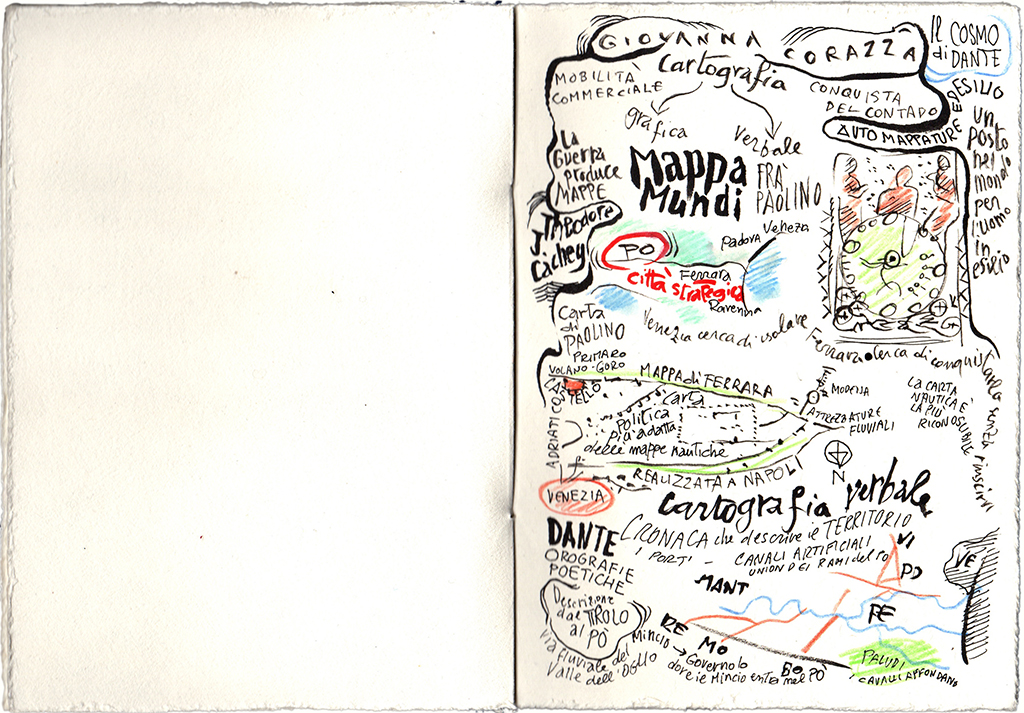
Giovanna Corazza (Università Ca’ Foscari – Venezia / University of Notre Dame, MSCA Fellow)

Maurice Aymard (EHESS/MSH) : Introduction
Jean-Charles Ducène : Venise chez les géographes arabes
Nathalie Bouloux : «Il primato di Venezia» dans les études géographiques aux XIVe et XVe siècles
Christophe Austruy
L’Arsenale Vecchio, l’Arsenale Novo e la Tana nella pianta di Fra’ Paolino.
Ipotesi sull’Arsenale di Venezia all’inizio del XIV secolo

Anna Pegoretti
A nord di Venezia: Dante cartografo e le Alpi centro-orientali

Theodore J. Cachey Jr.
Il cosmo di Dante: automappature ed esilio