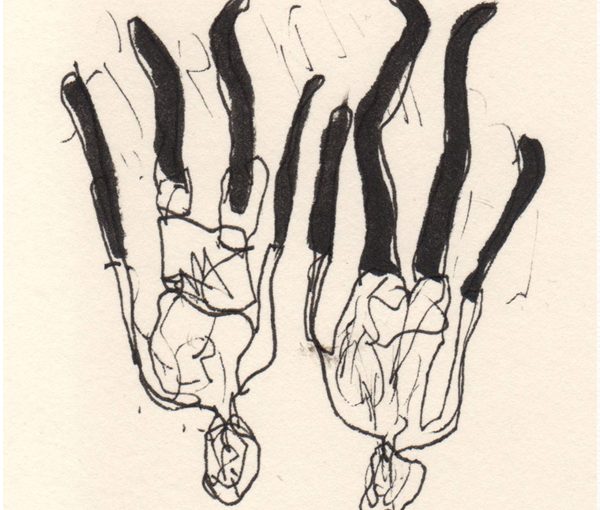
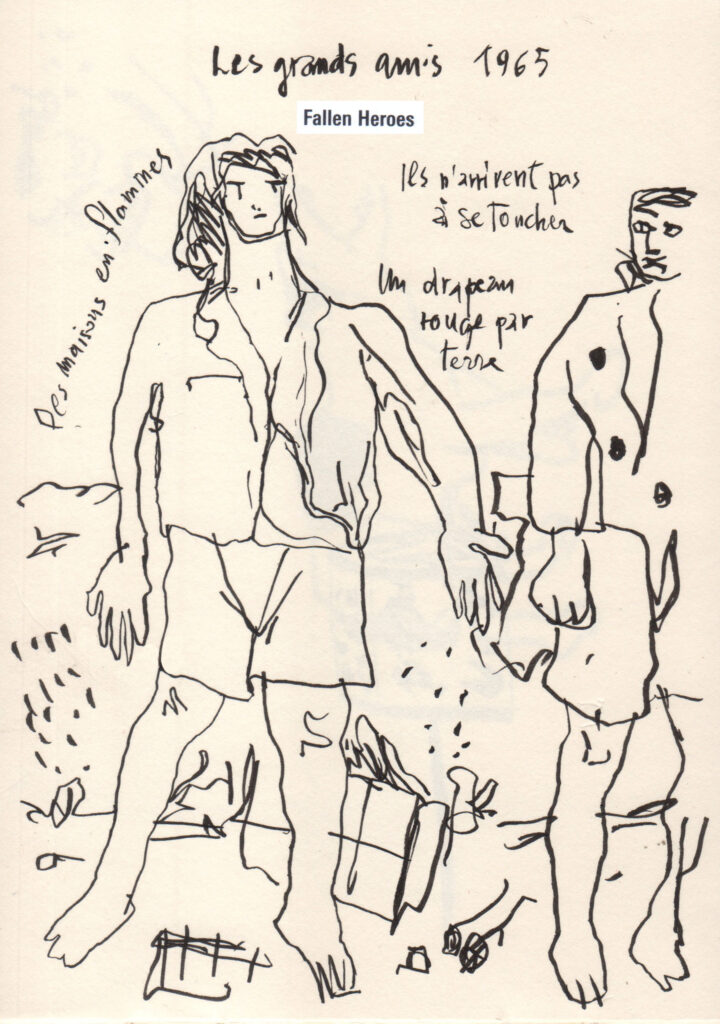
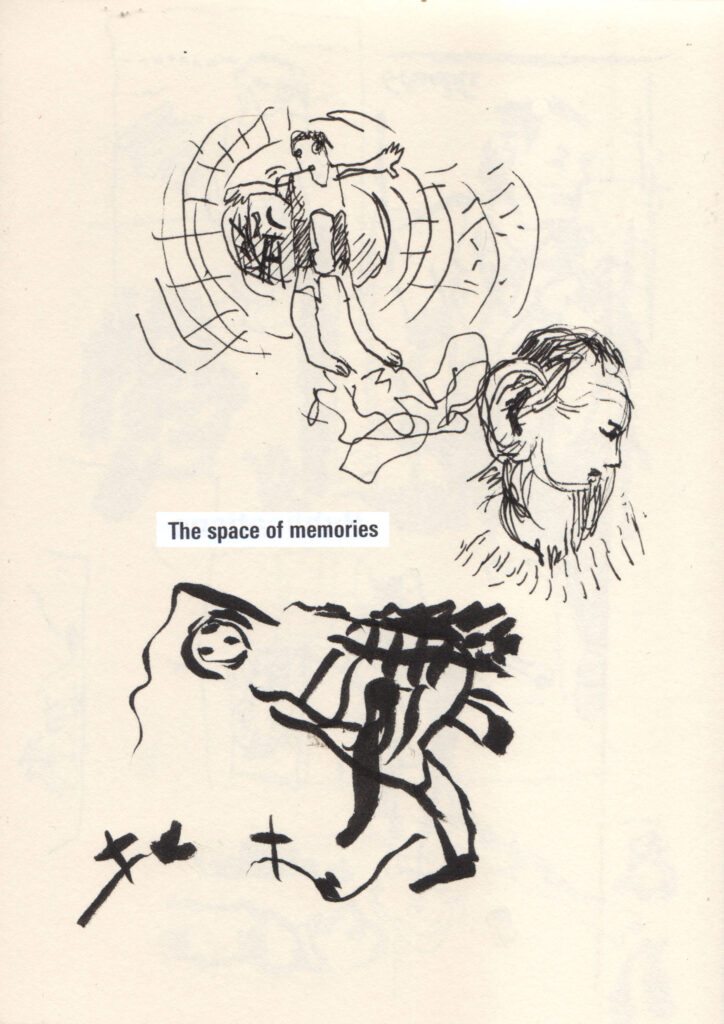
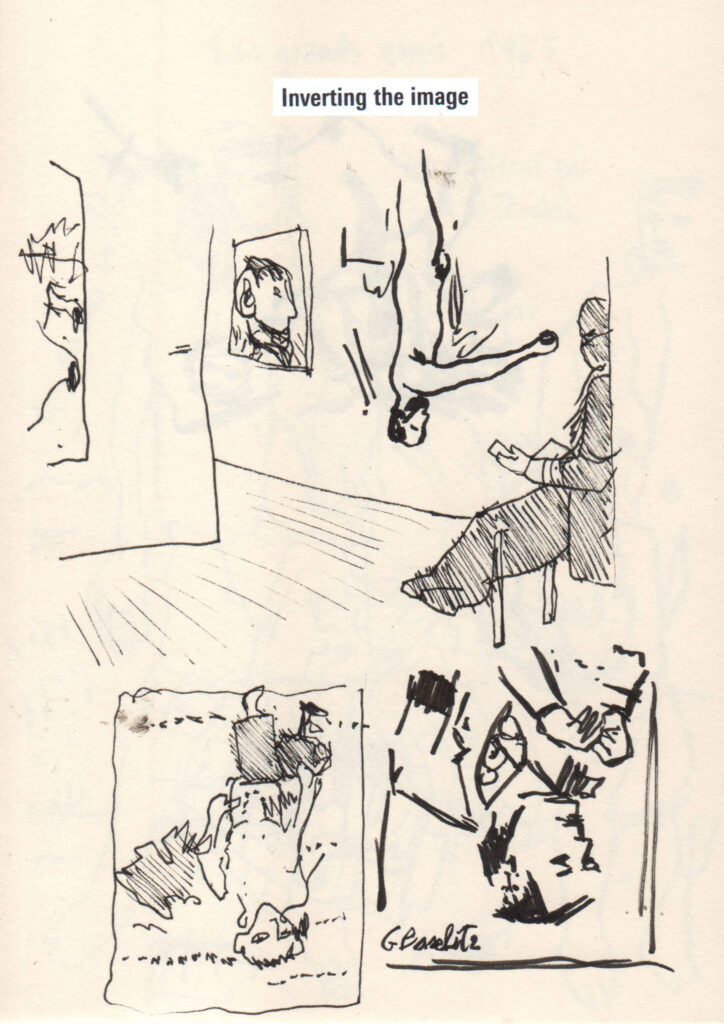
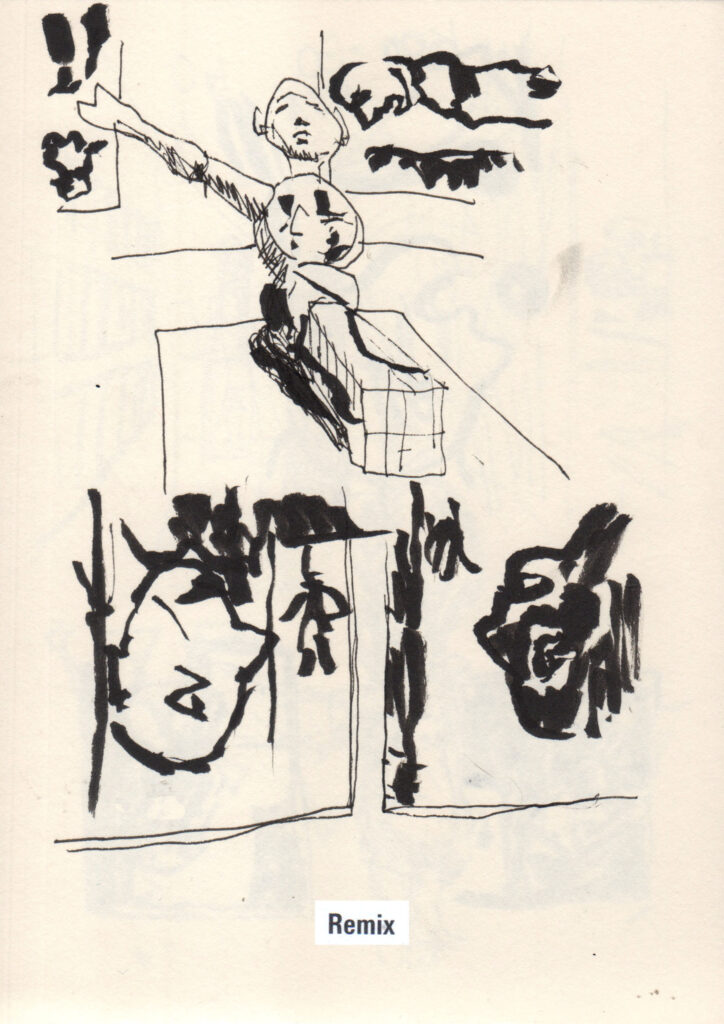
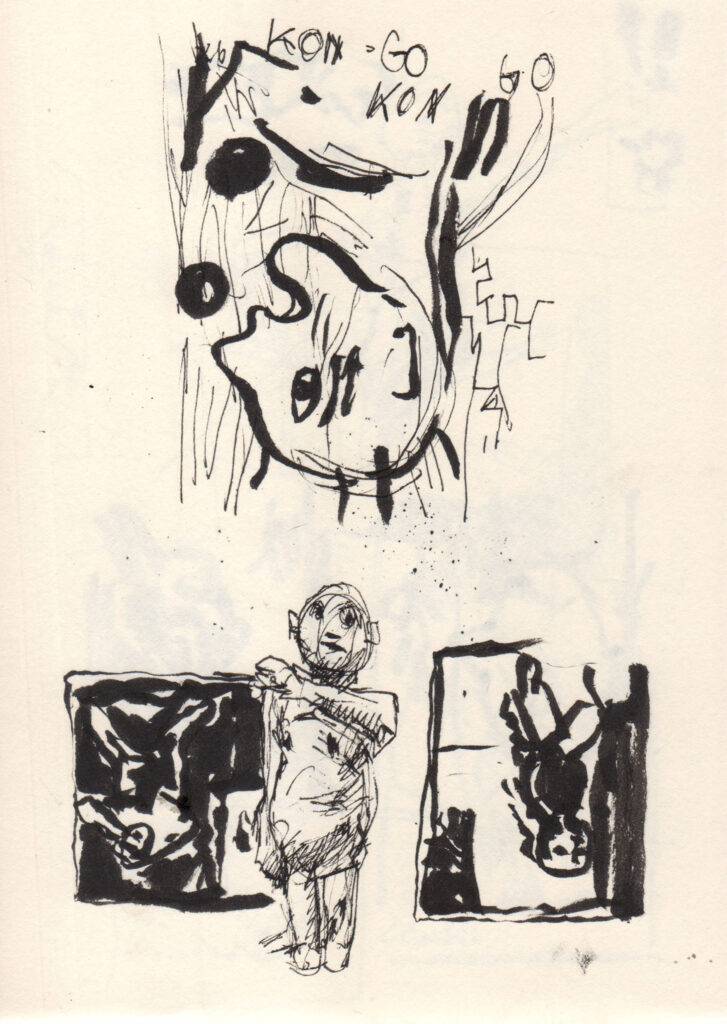
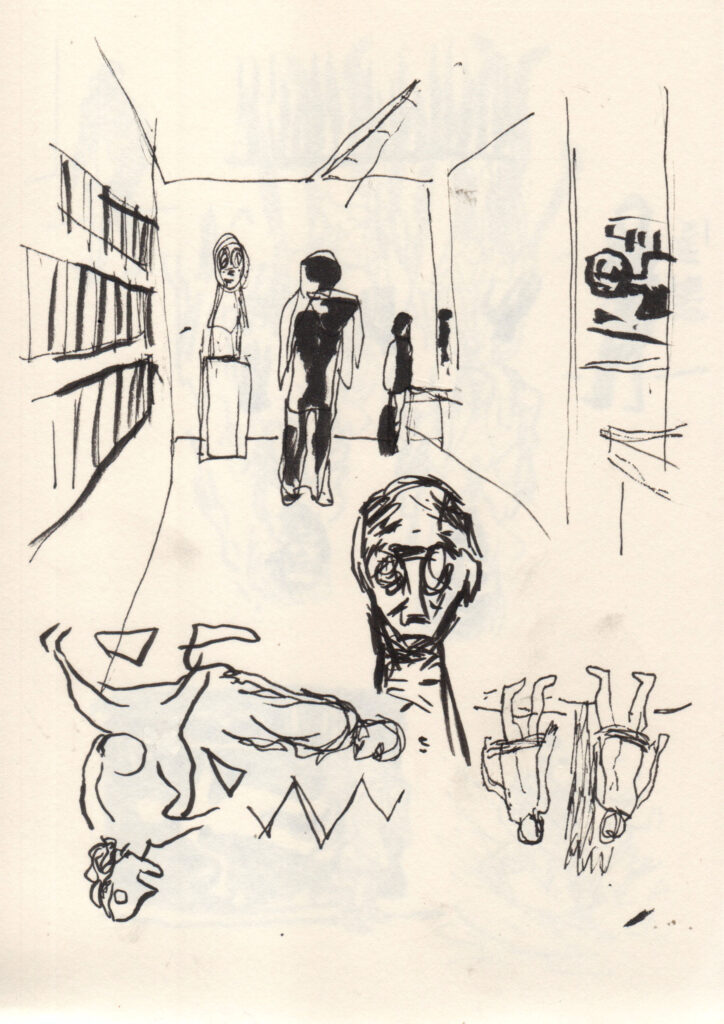
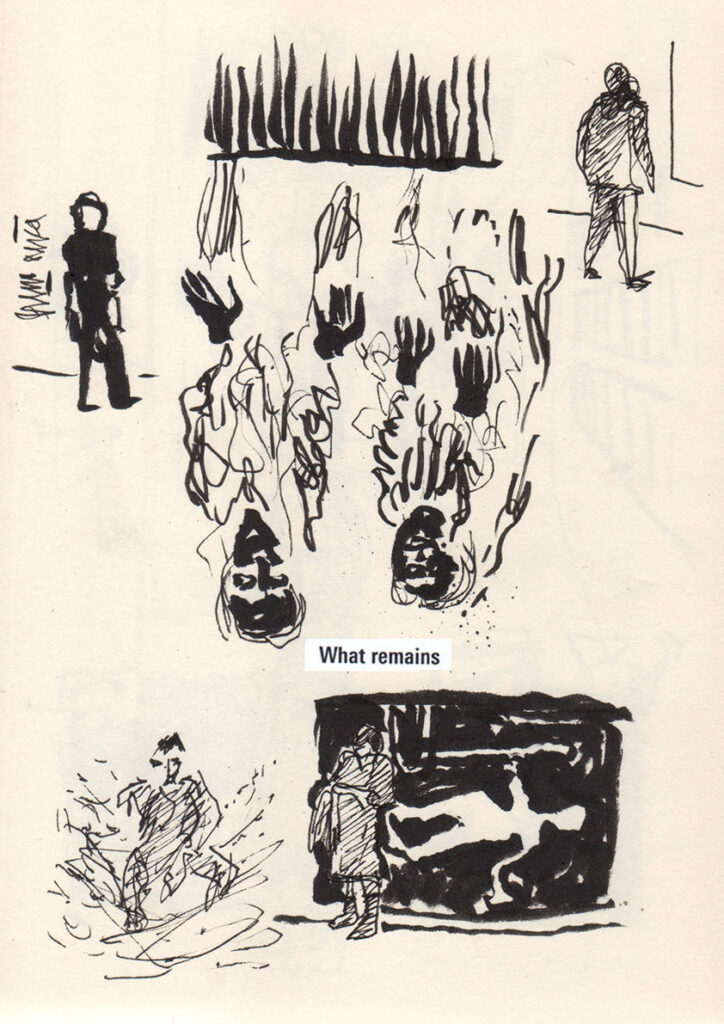
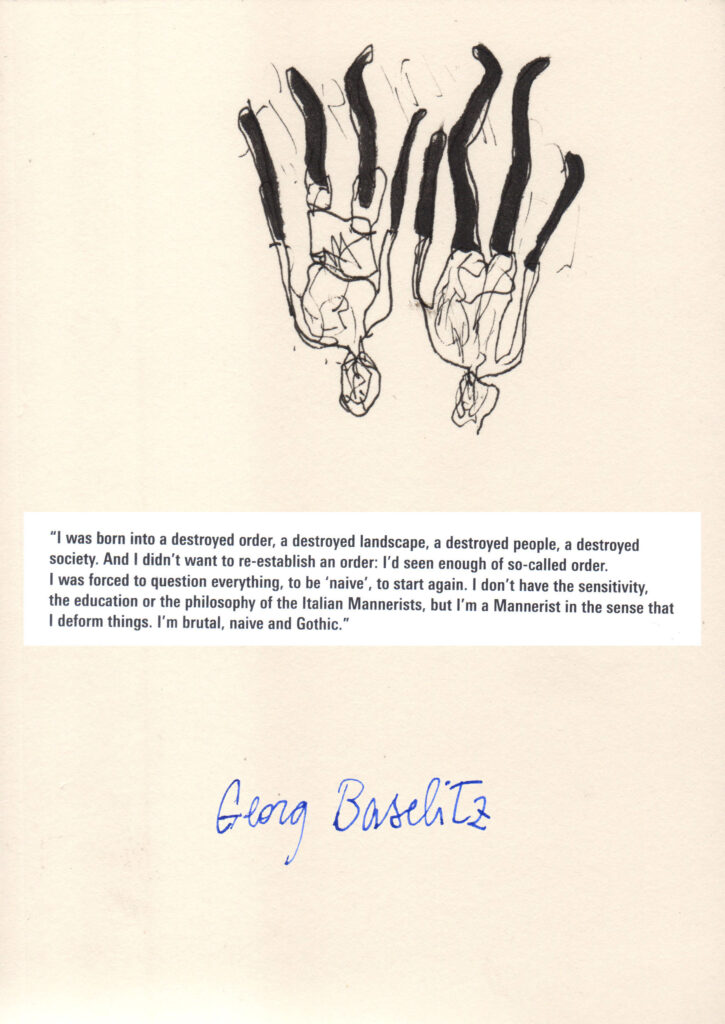
GEORG BASELITZ at the POMPIDOU CENTRE – PARIS
2022
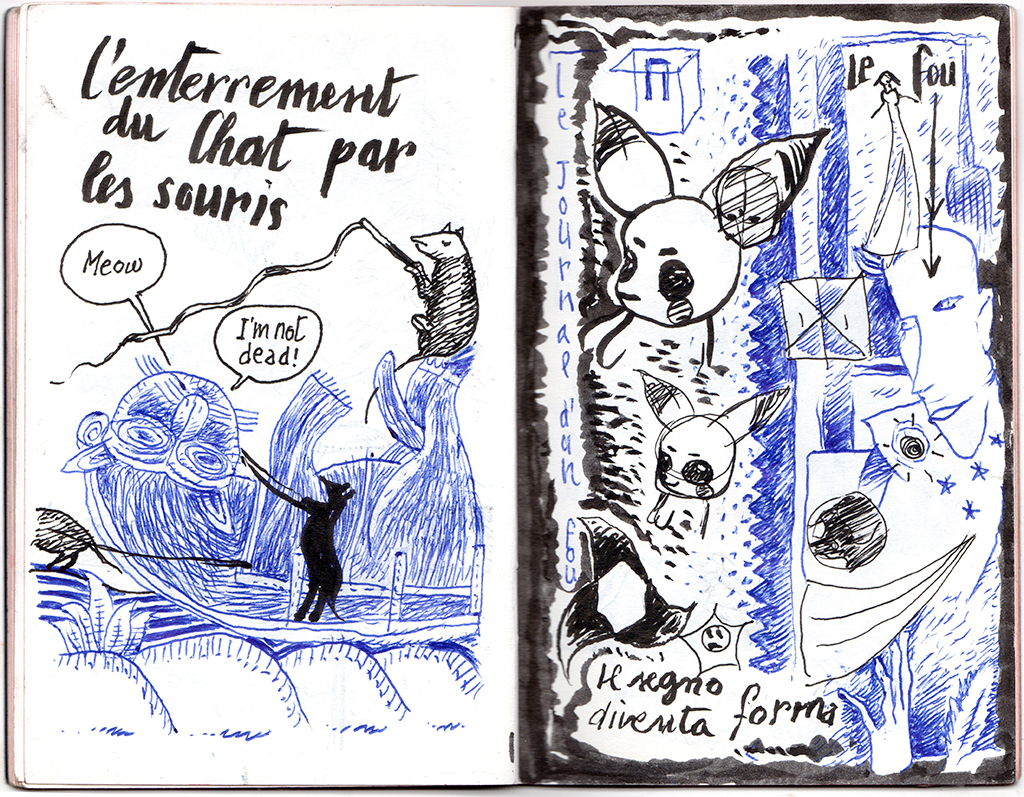
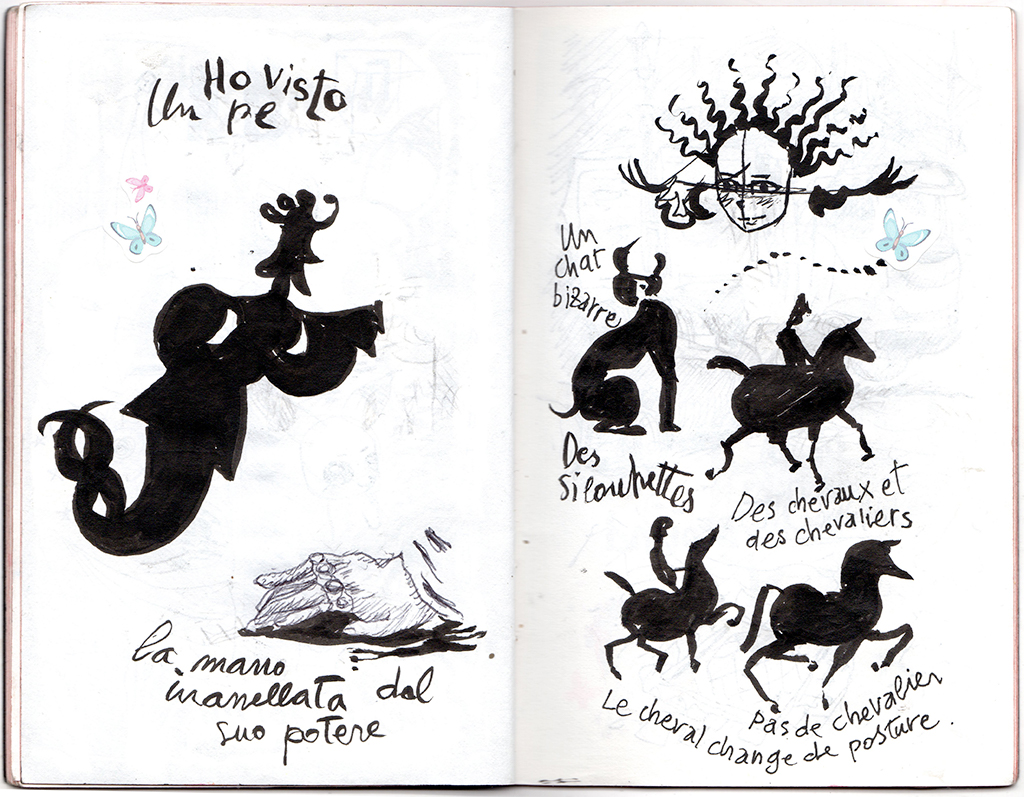
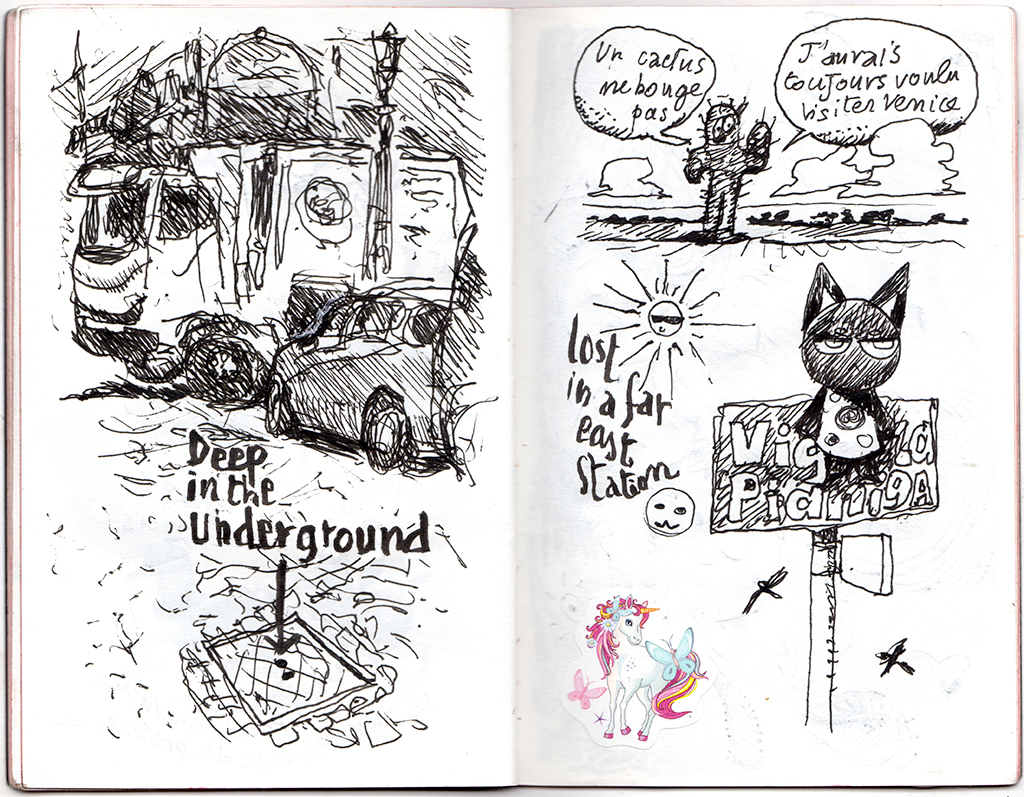
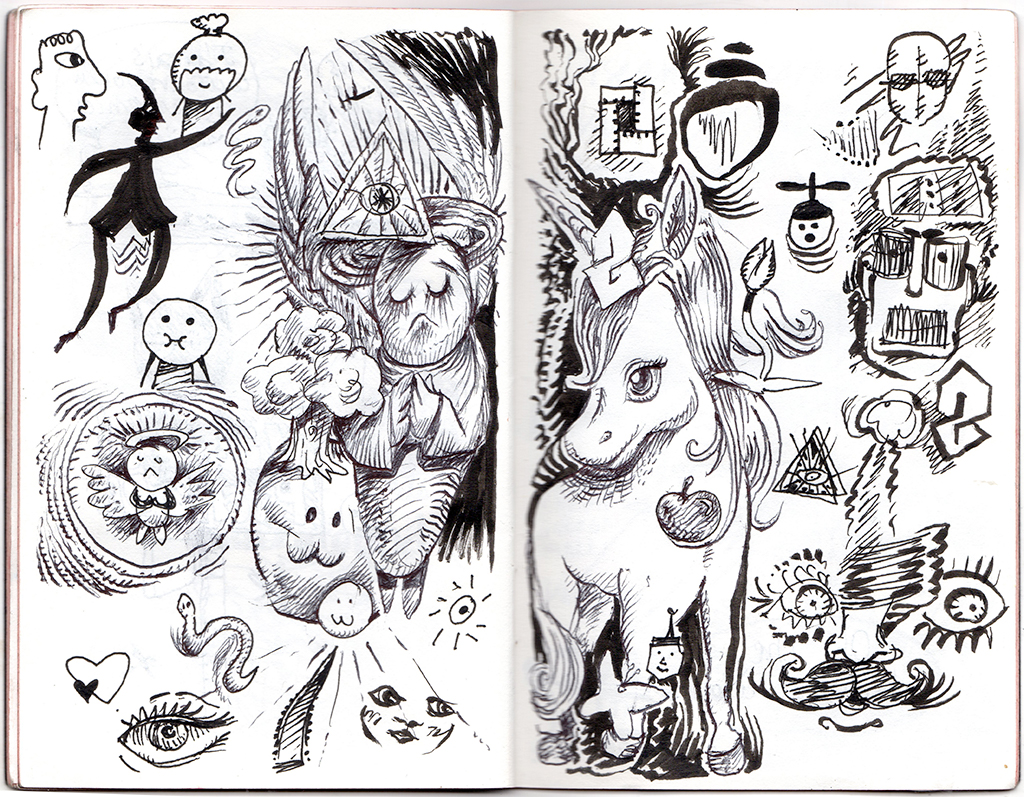
Drawing, indian ink and gel ên on paper (sketchbook)
14,5×20,7 cm
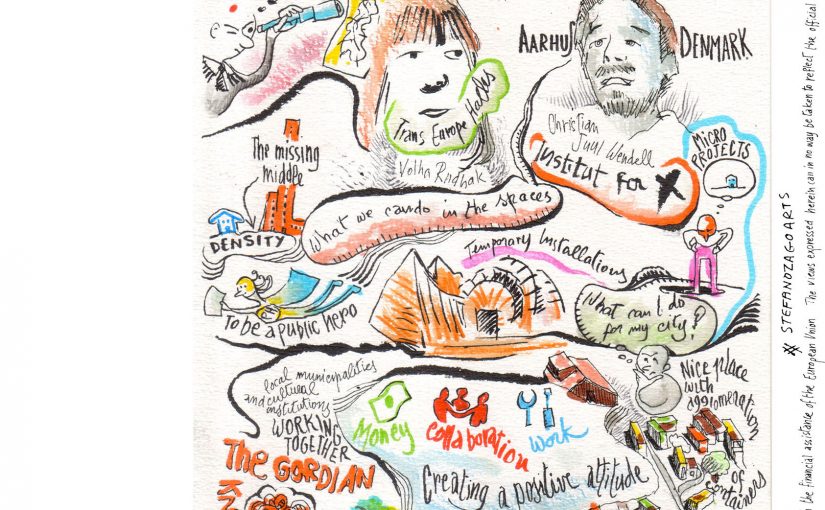
ART/S for Meeting, Communicating, Sharing
GEORG BASELITZ at the POMPIDOU CENTRE – PARIS
2022
Drawing, indian ink and gel ên on paper (sketchbook)
14,5×20,7 cm
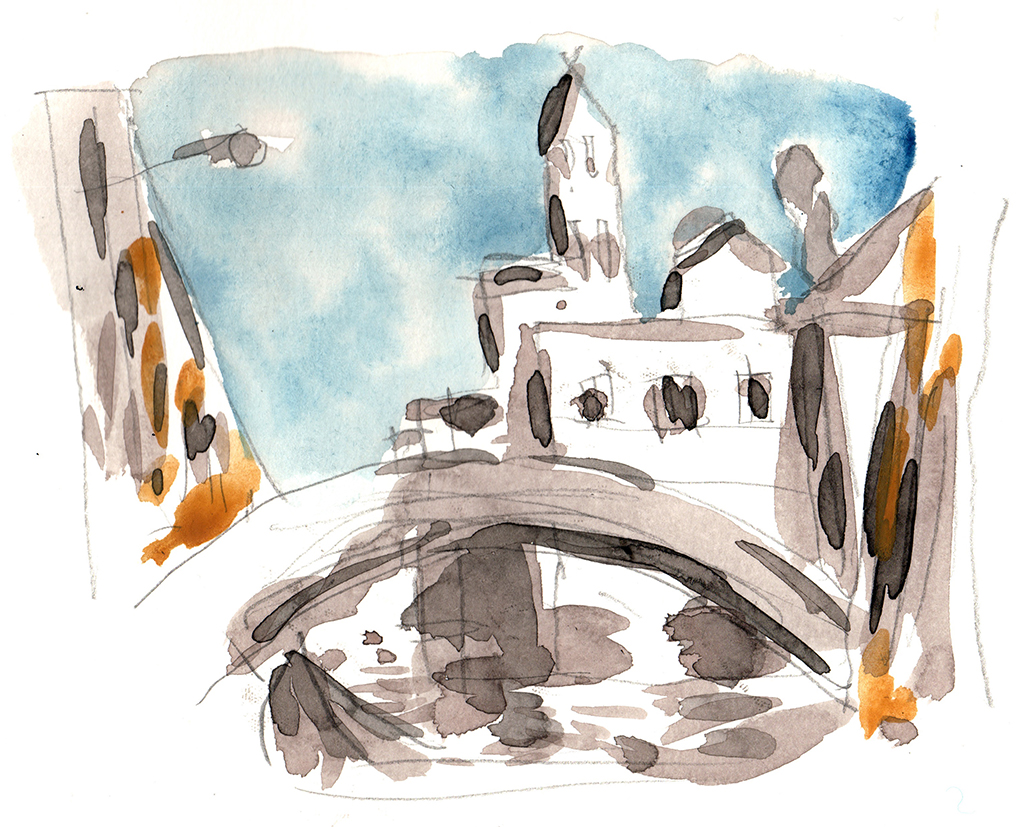
VENEZIA – From JOHN RUSKIN
pencil and watercolor
13 x 10,5 cm
2026
A watercolour painted quickly in Venice, in front of the Ponte dei Pugni, from a sketch by John Ruskin.
Ruskin, as can be clearly seen, was also on a gondola and therefore his viewpoint was very low, much lower than the view usually enjoyed by those walking on the fondamenta.
I often use this drawing in my drawn art history lessons for this reason. The point of view is important. Observers in the past were different from us, and if it is true that space is produced by the observer, Venice is a place that allows us to reflect on this concept.
Like Ruskin, whom we imagine sitting in a gondola with a sketchbook and the minimum tools needed to paint his watercolours, or using only a pencil in three colours: a bluish grey, blue for the sky (created using the wet-on-wet technique) and a few touches of orange-ochre.
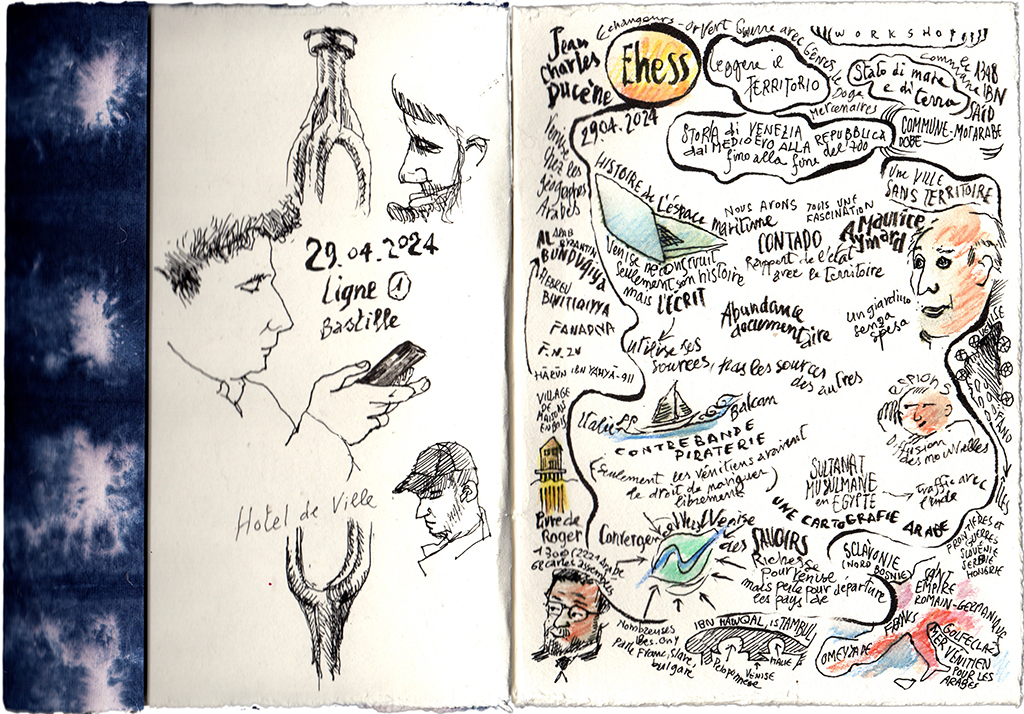


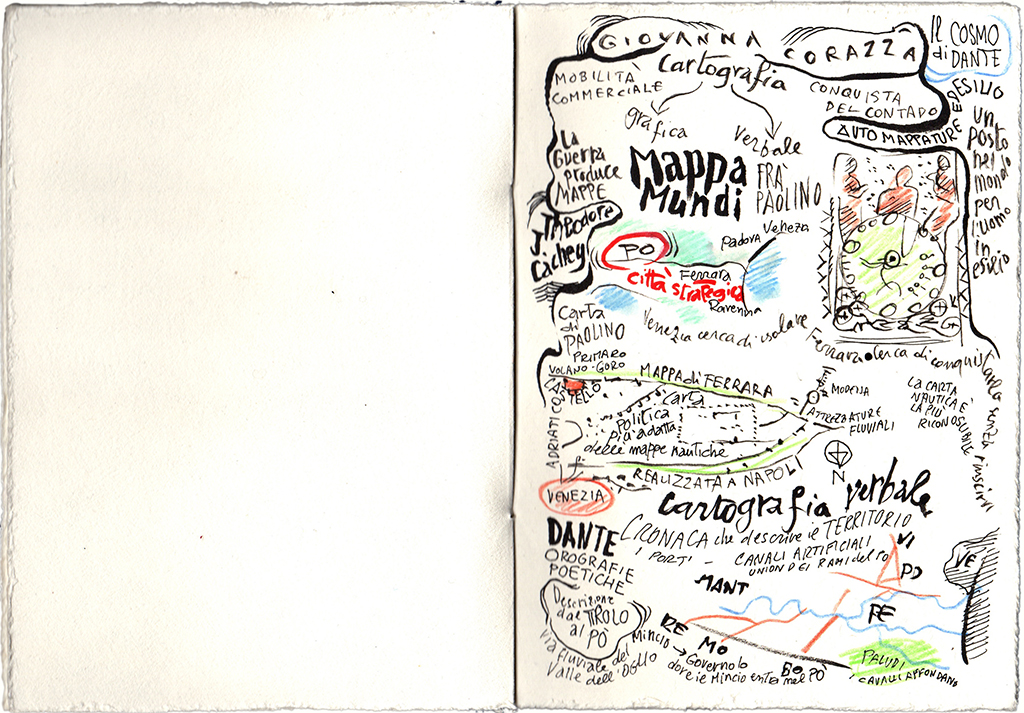
Workshop at the EHESS – École des Hautes Études en Sciences Sociales / Centre de Recherches Historiques – Paris
Organisé par Christophe Austruy (EHESS-CNRS, Centre de Recherches Historiques)
Giovanna Corazza (Università Ca’ Foscari – Venezia / University of Notre Dame, MSCA Fellow)
Maurice Aymard (EHESS/MSH) : Introduction
Jean-Charles Ducène : Venise chez les géographes arabes
Nathalie Bouloux : «Il primato di Venezia» dans les études géographiques aux XIVe et XVe siècles
Christophe Austruy
L’Arsenale Vecchio, l’Arsenale Novo e la Tana nella pianta di Fra’ Paolino.
Ipotesi sull’Arsenale di Venezia all’inizio del XIV secolo
Anna Pegoretti
A nord di Venezia: Dante cartografo e le Alpi centro-orientali
Theodore J. Cachey Jr.
Il cosmo di Dante: automappature ed esilio

Positive – Negative
Questions of depth.
The introduction of elements in the foreground that rise out of the frame produces depth and a photographic effect.
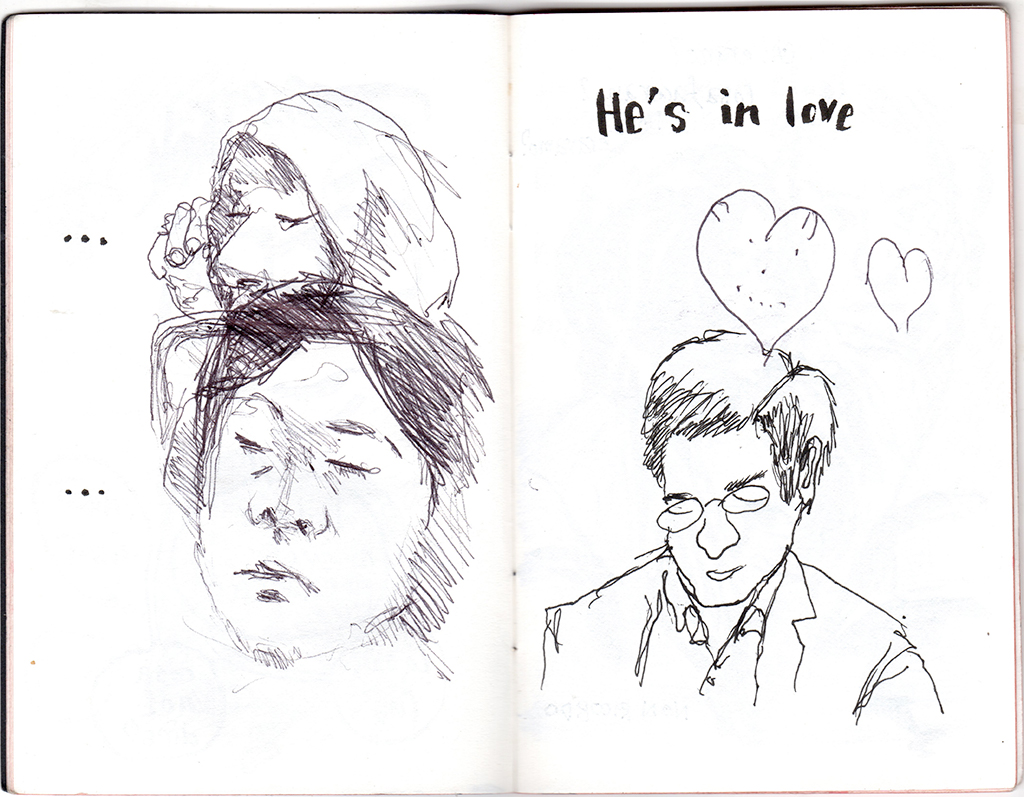
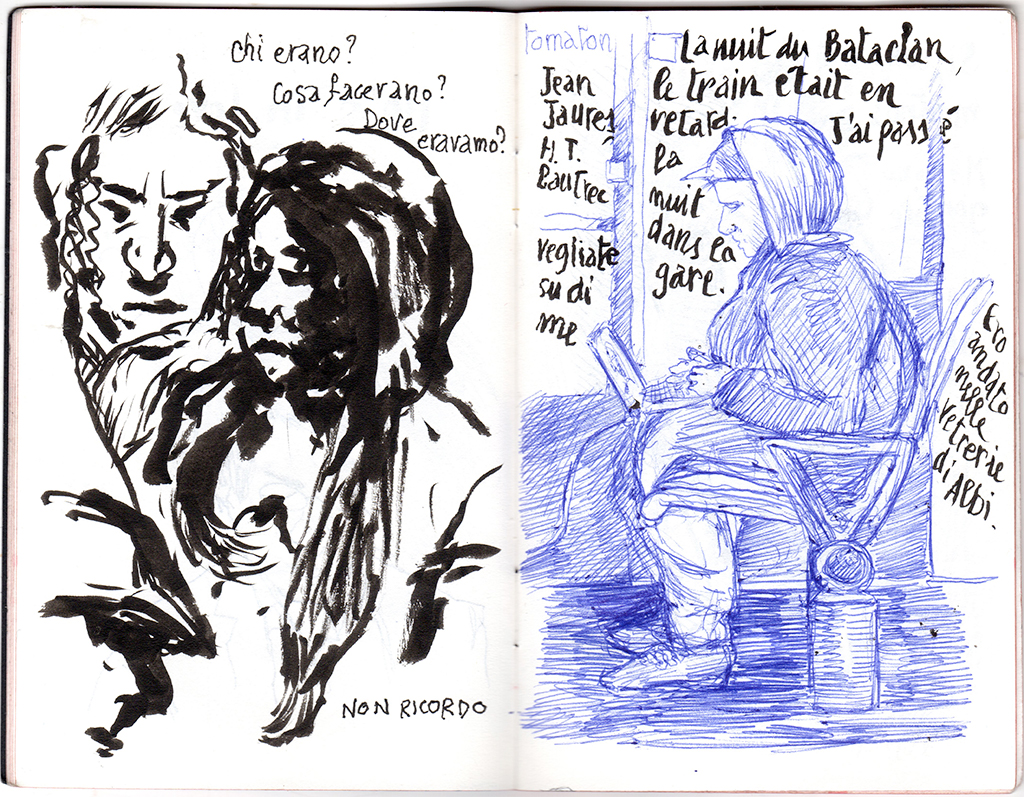
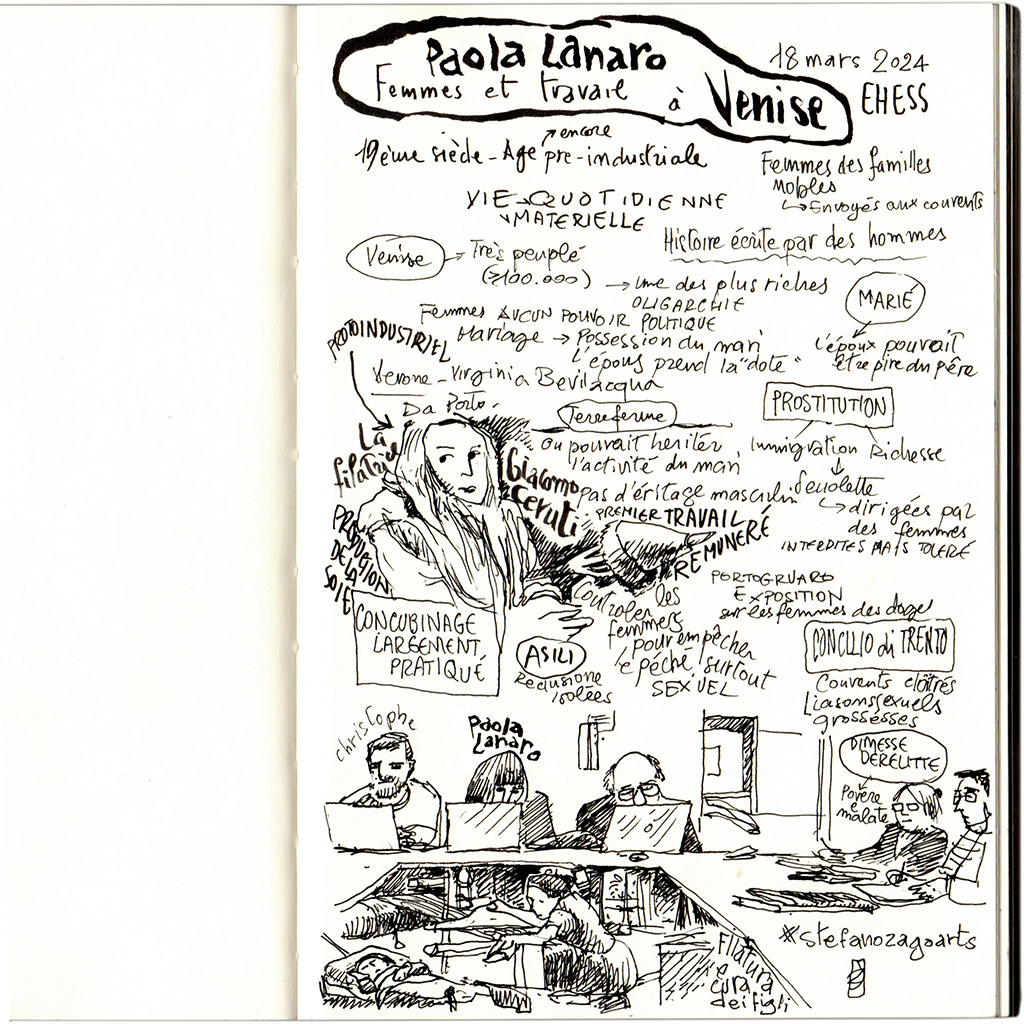
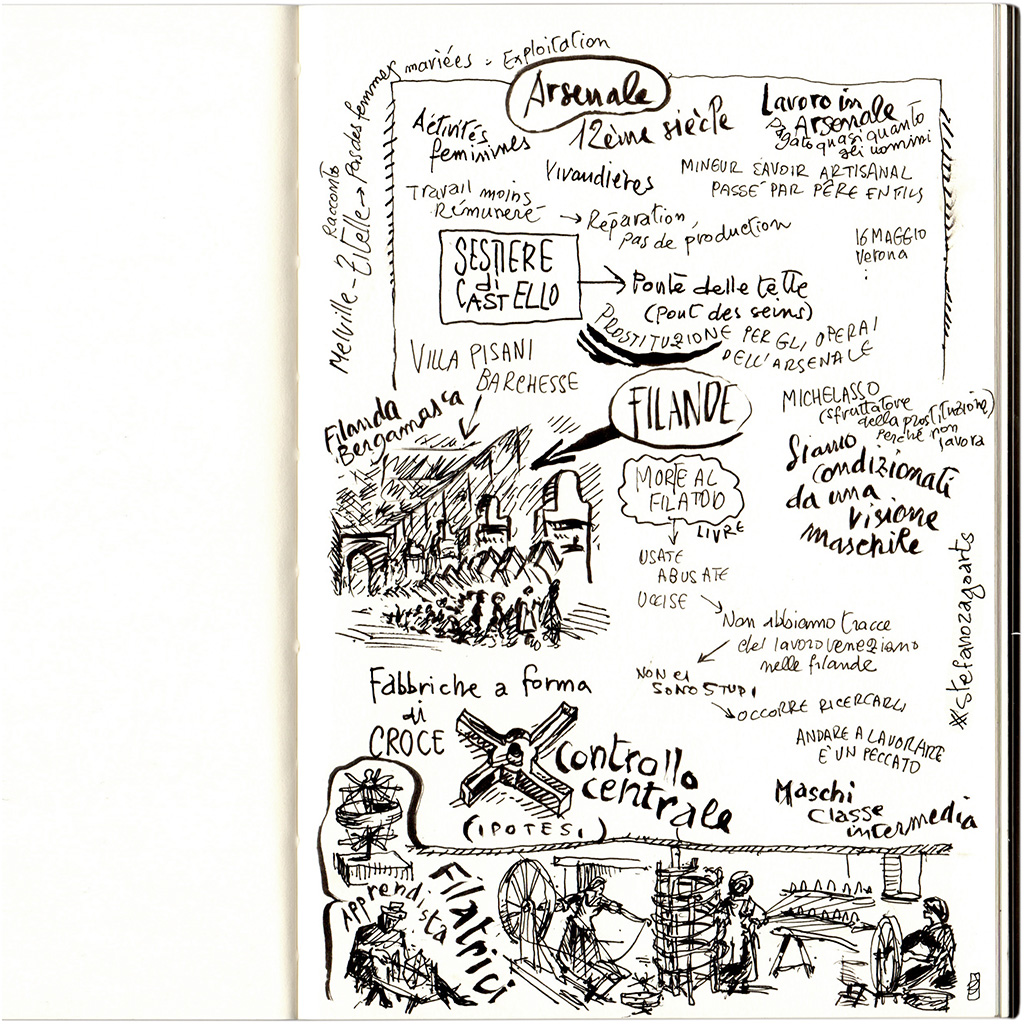
As this is the week of the fight against discrimination, I would like to share with you two pages of notes I collected yesterday on my notebook during a lecture at THE EHESS: École des hautes études en sciences sociales In Paris, on the history of women’s work in Venice given by Professor Paola Lanaro of the University of Cà Foscari, Venice. In particular, I point out that dwelling on images by drawing in a simple and spontaneous way while listening to a speaker at the same time can help us discover meanings we might not have noticed otherwise.
I also invite us to experiment with various calligraphies in note-taking by giving more or less emphasis to words that we find more or less important.

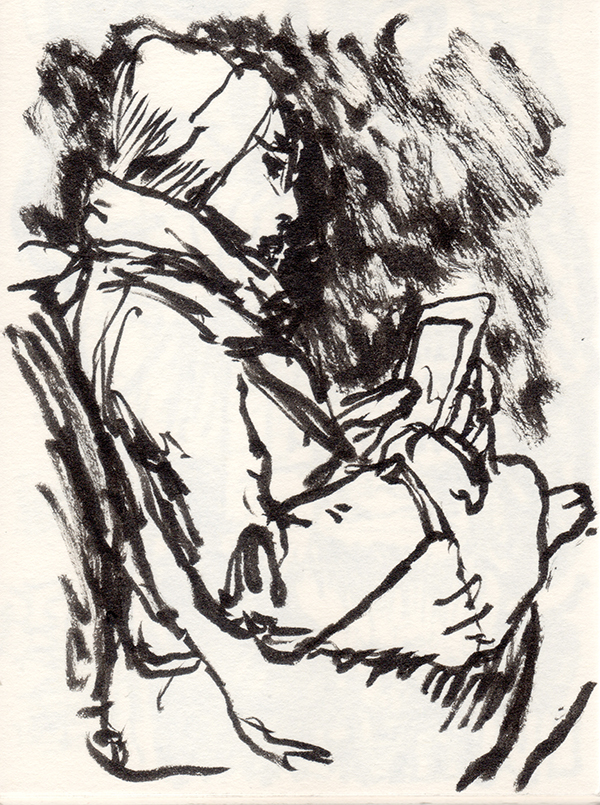
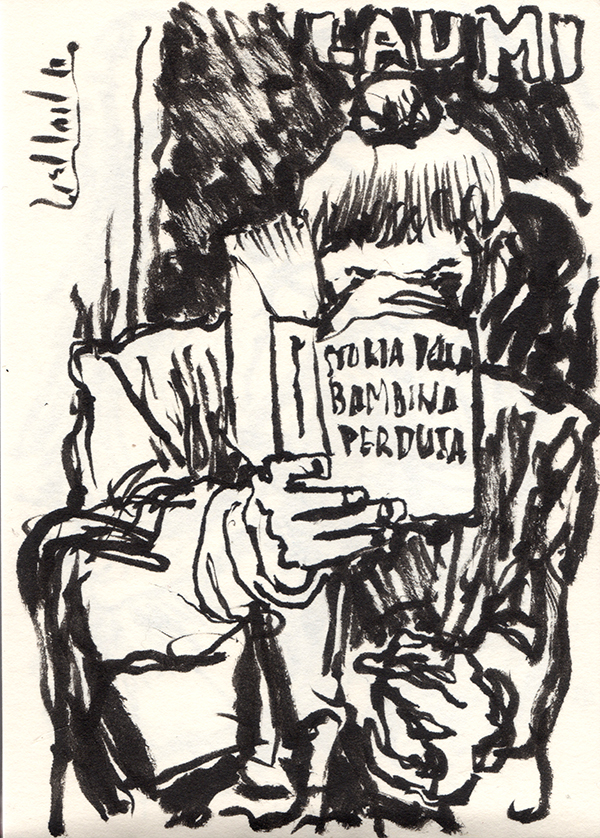
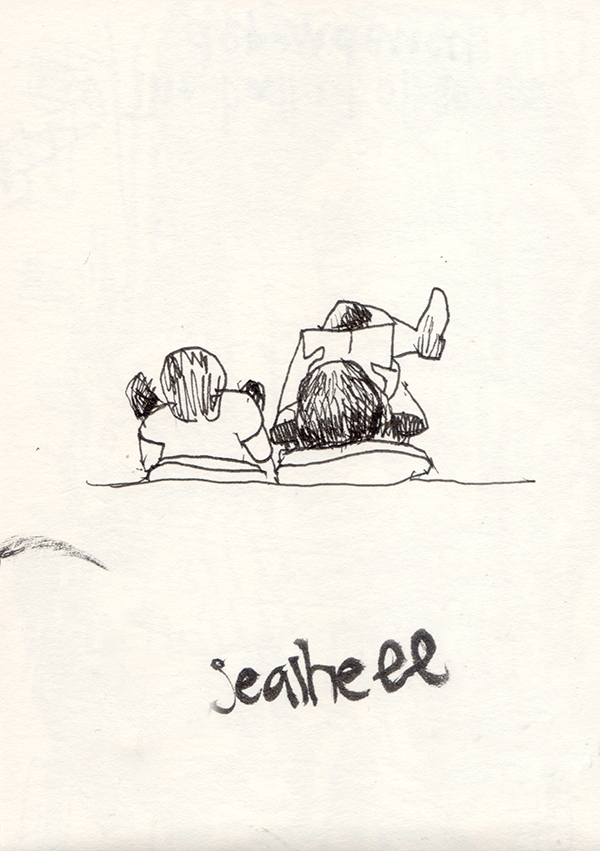

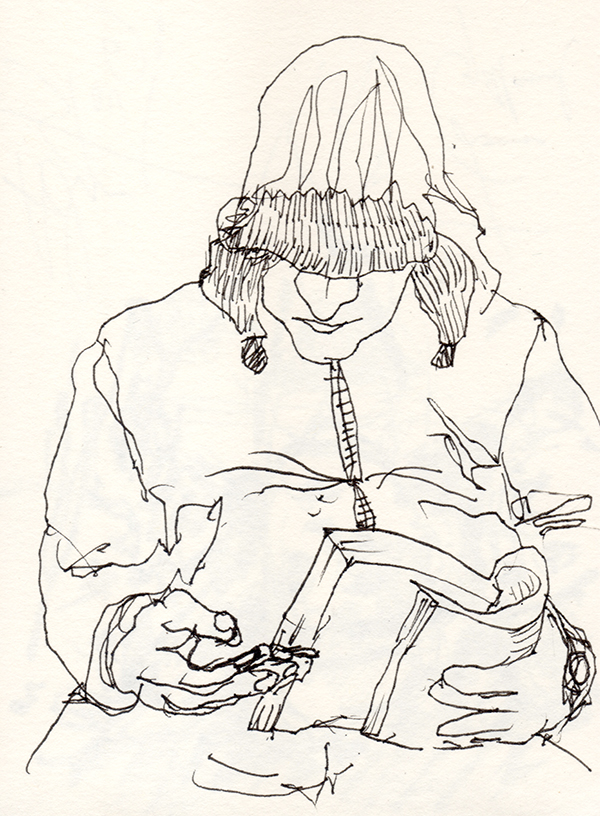

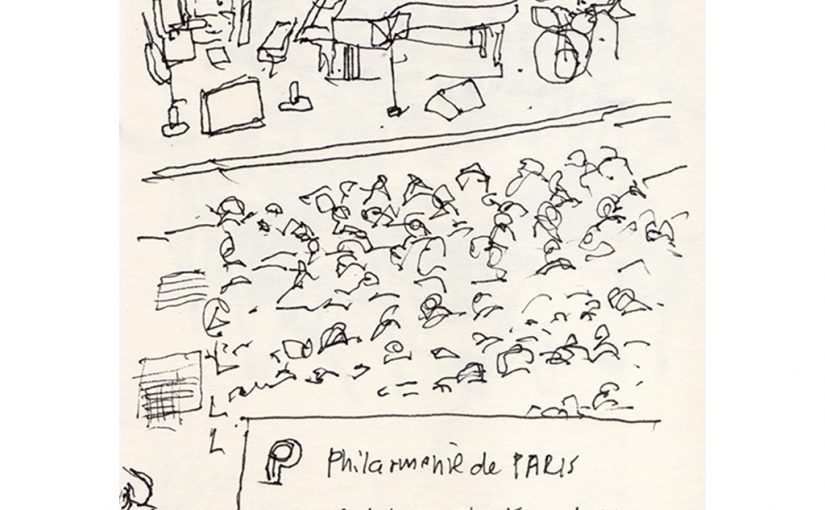
On the occasion of the release of Nan Goldin’s film All the beauty and the bloodshed, I offer these drawings made during the screening at the Philharmonie de Paris in 2015, with music by the Tiger Lillies.
“
The Ballad of Sexual Dependency, made between 1979 and 1986, is one of Nan Goldin’s earliest photographic series, but remains today, and rightly so, the best known of all her works. The slide show projected on a large screen is accompanied by the Tiger Lillies. A London musical trio, they are dark, provocative and blasphemous, grimacing with their Brechtian inspiration which fits perfectly with the images. The Ballad of Sexual Dependency is a masterpiece, an authentic chronicle of modern times.
“*
Nan Goldin, fotography
The Tiger Lillies
Martyn Jacques, Adrian Stout, Jonas Golland
* Source: Philharmonie de Paris
https://philharmoniedeparis.fr/fr/activite/spectacle/16677-nan-goldin-tiger-lillies
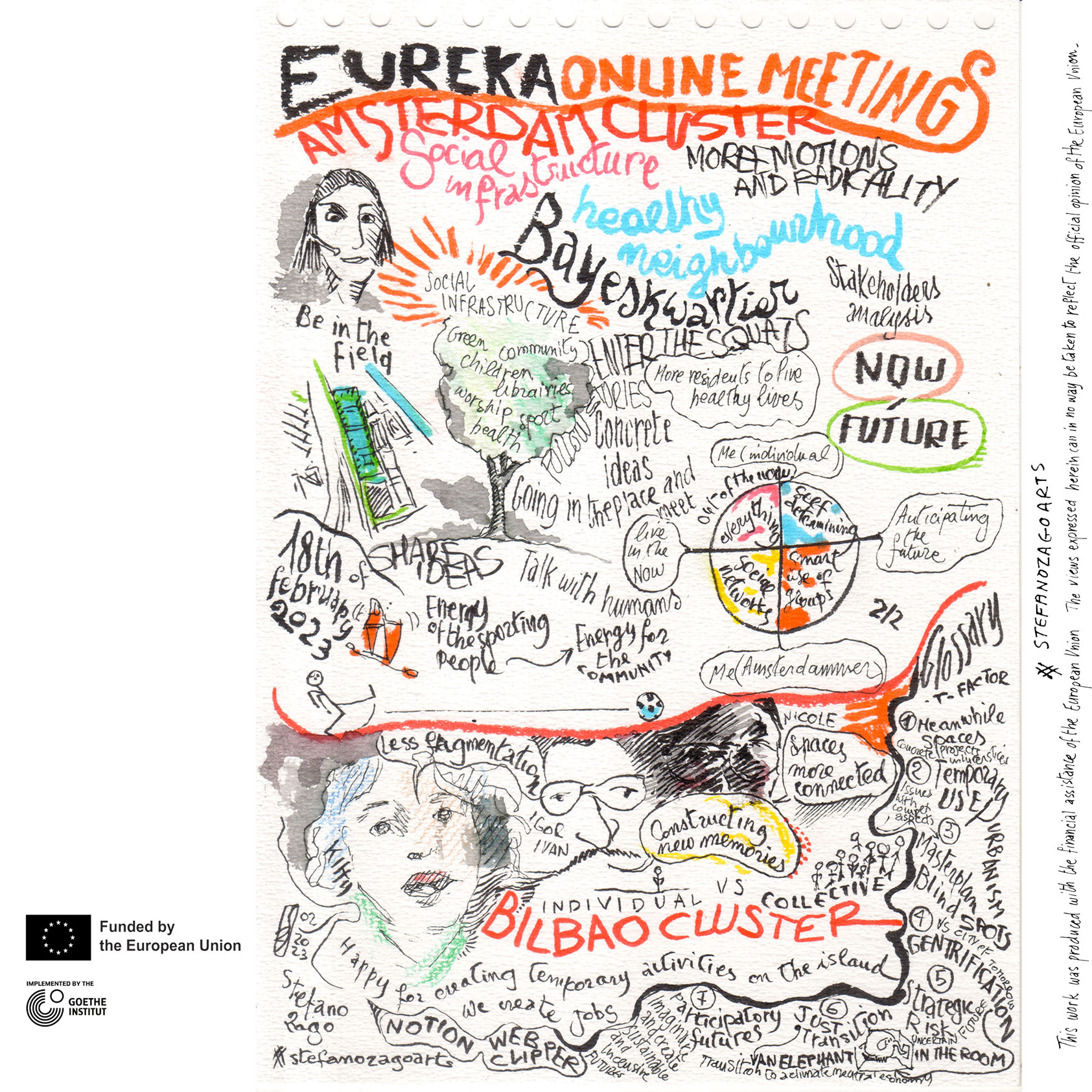
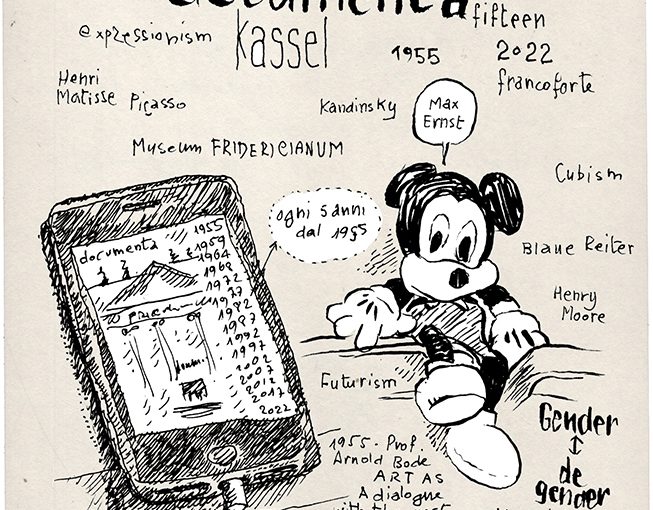
LIVE SKETCH – Report about documenta 15 in Kassel – Ruangrupa – the LUMBUNG concept
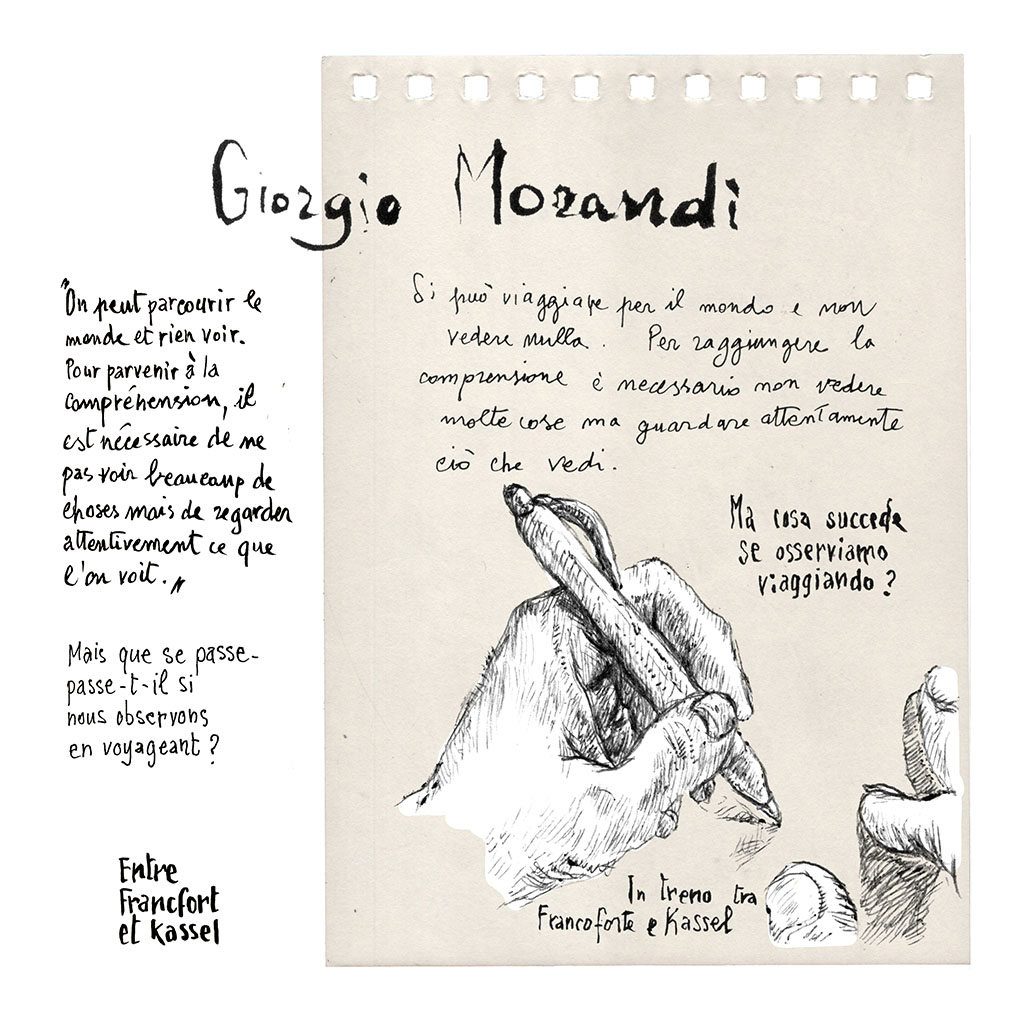
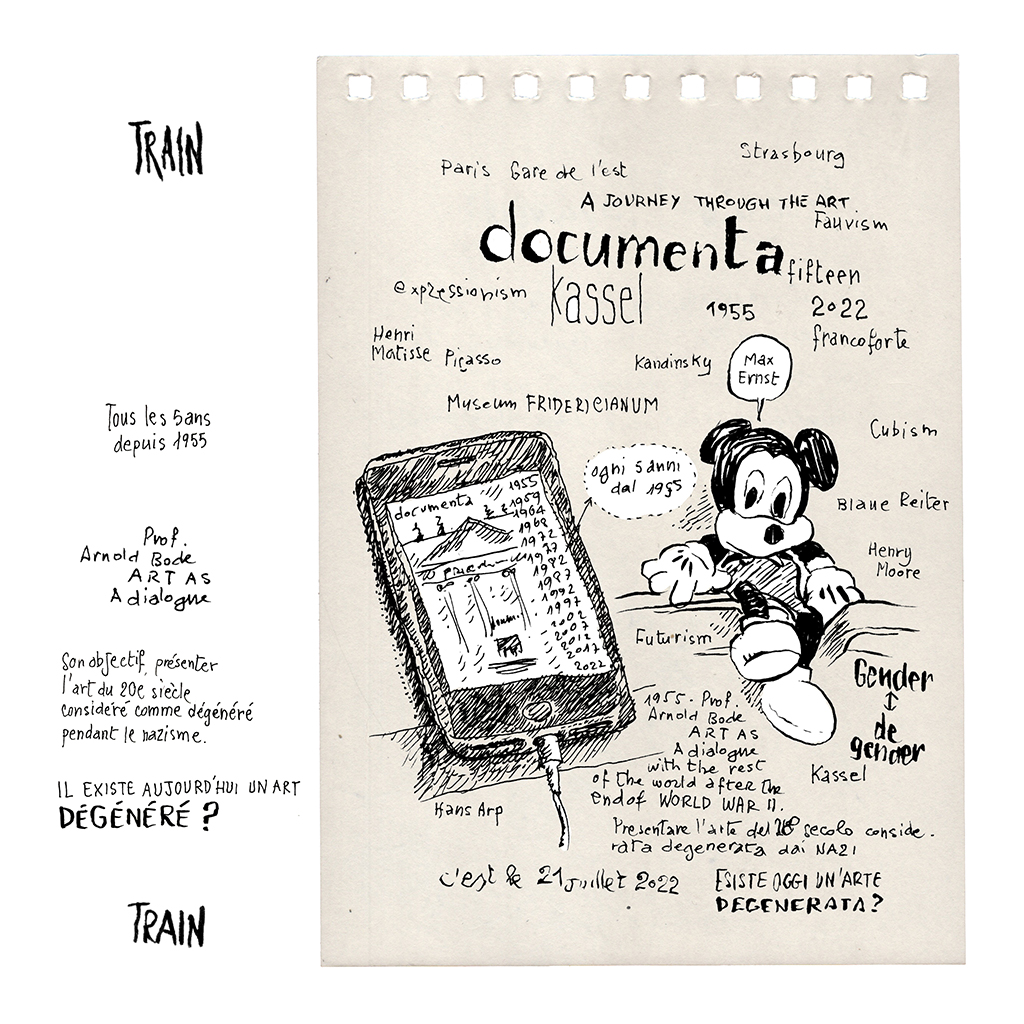

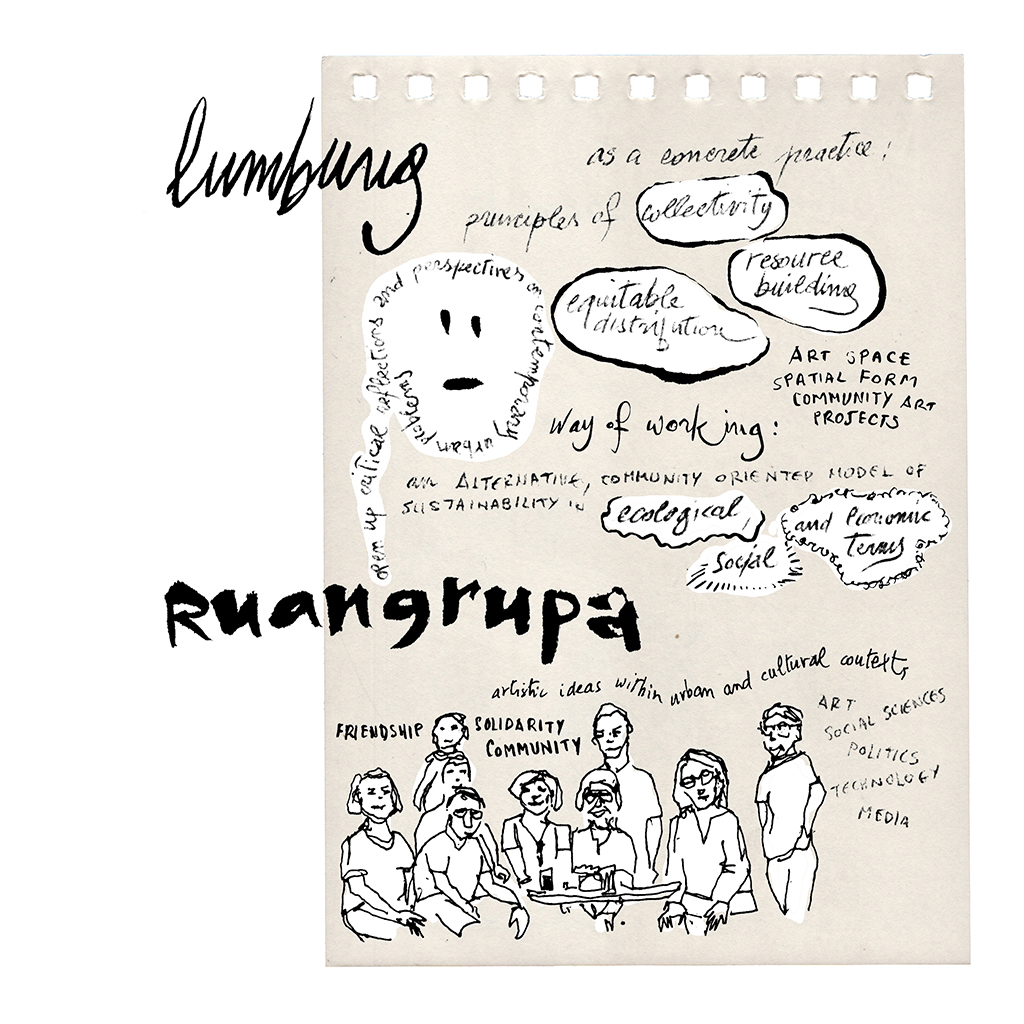
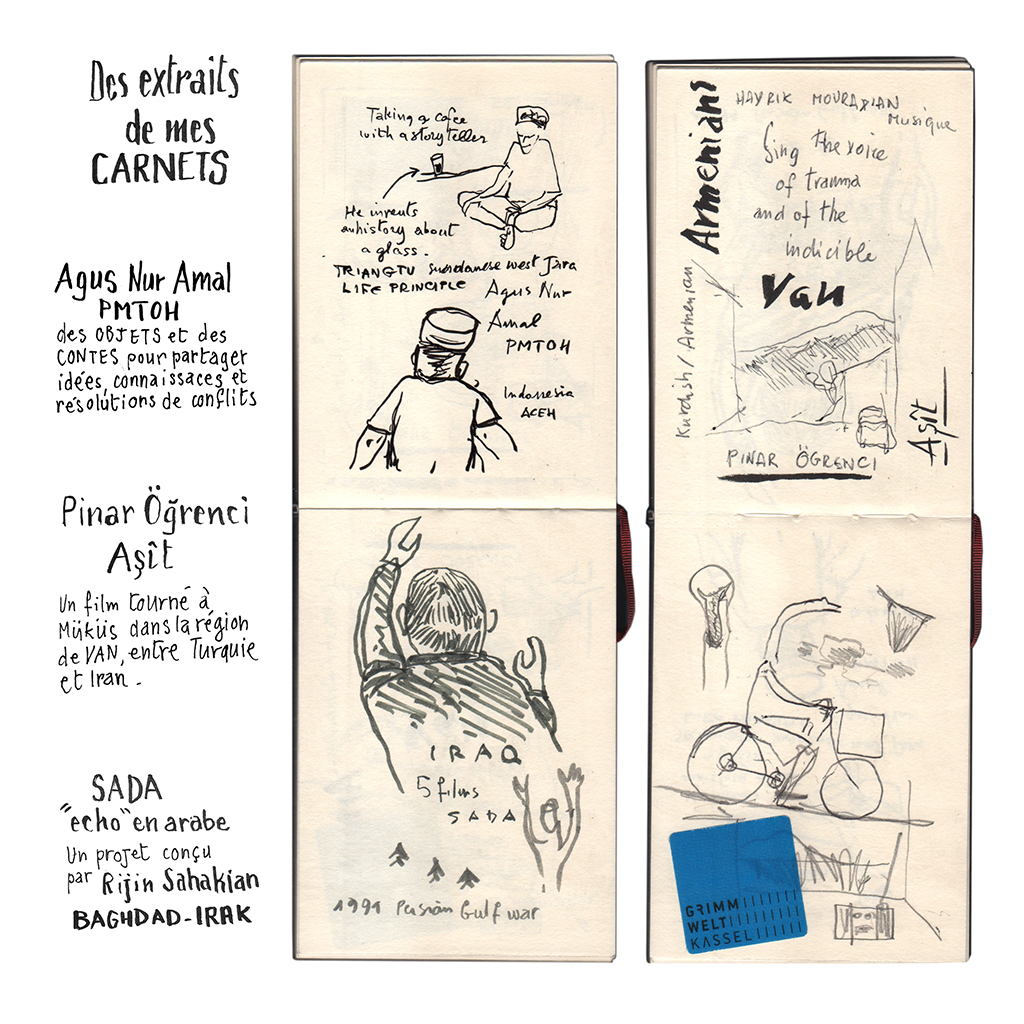
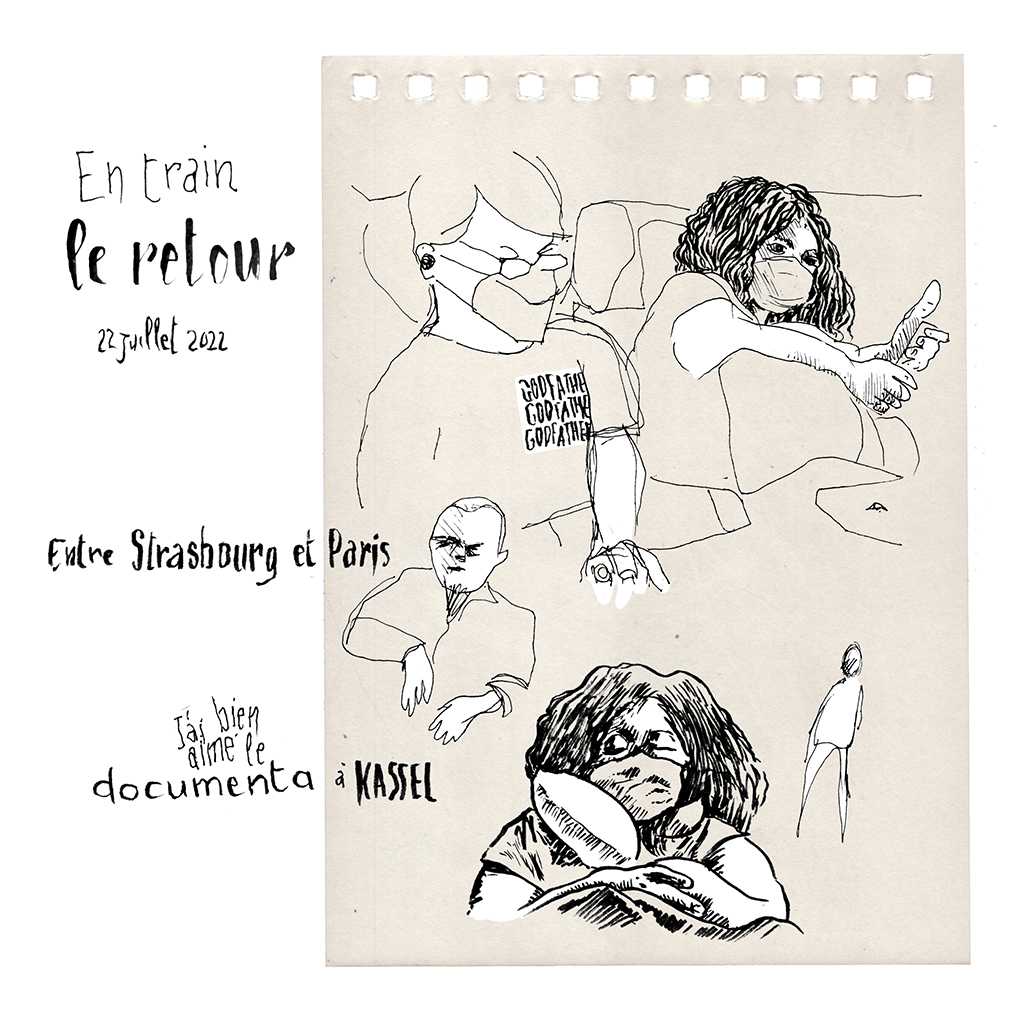

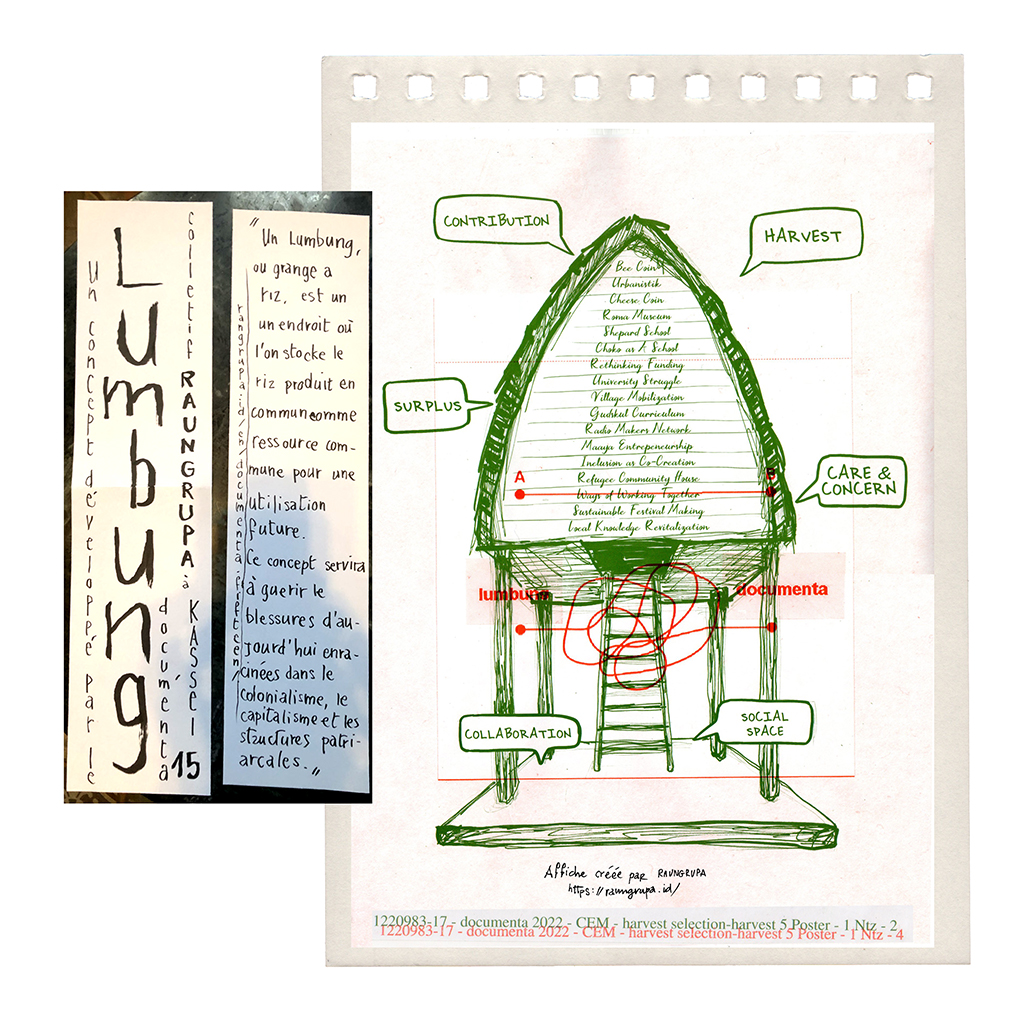
Documenta15
Digigraphies
2022
21 x 21 cm
LIVE SKETCH – Report about documenta 15 in Kassel – Ruangrupa – the LUMBUNG concept
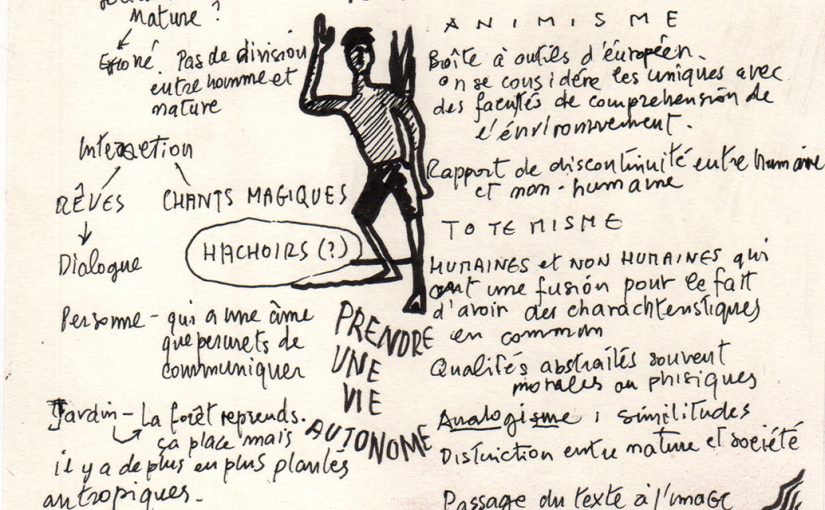
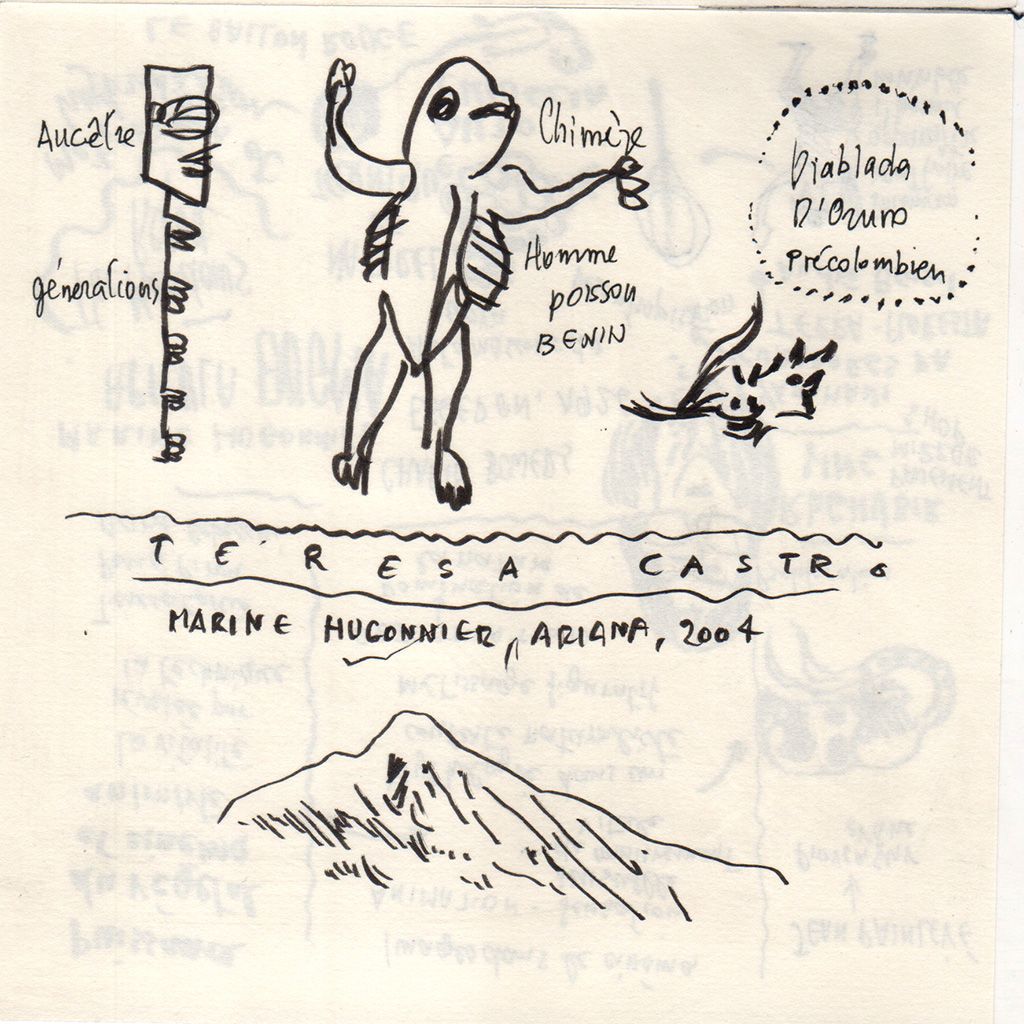
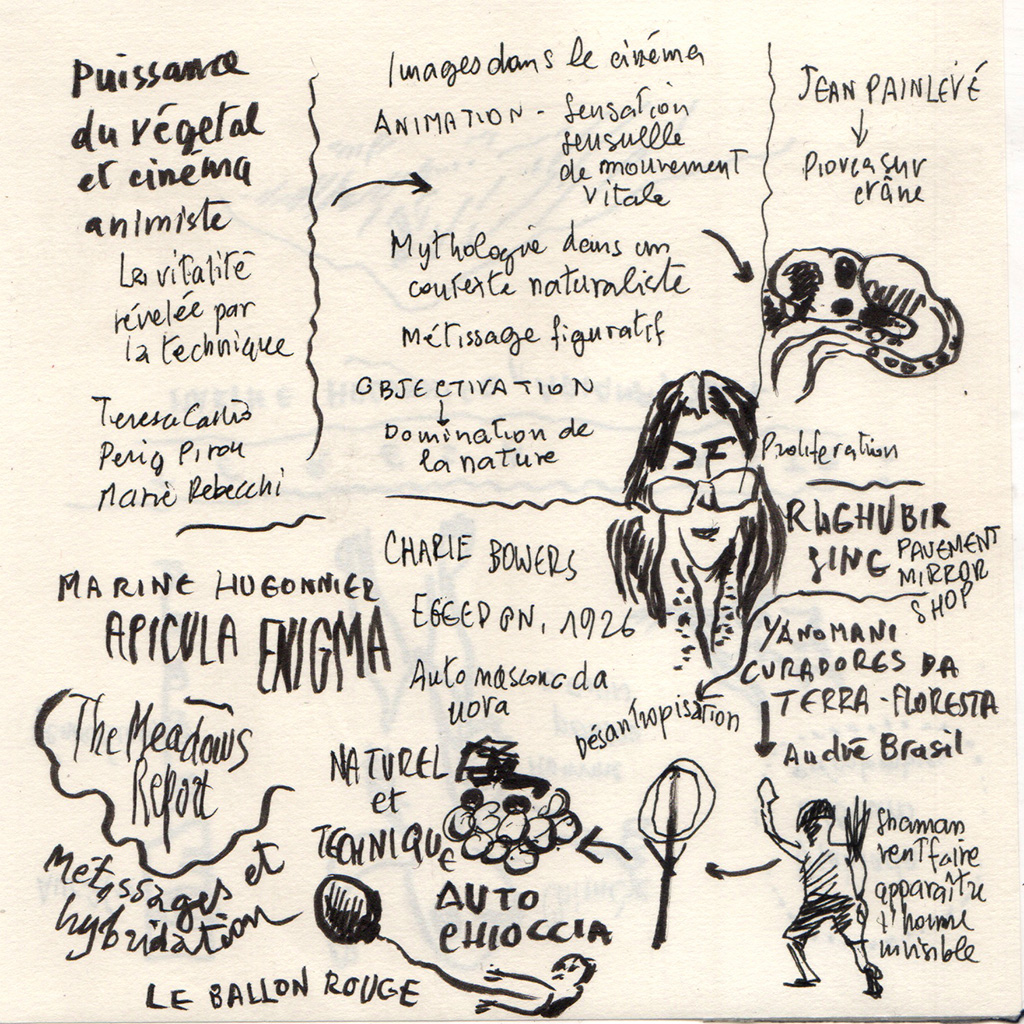
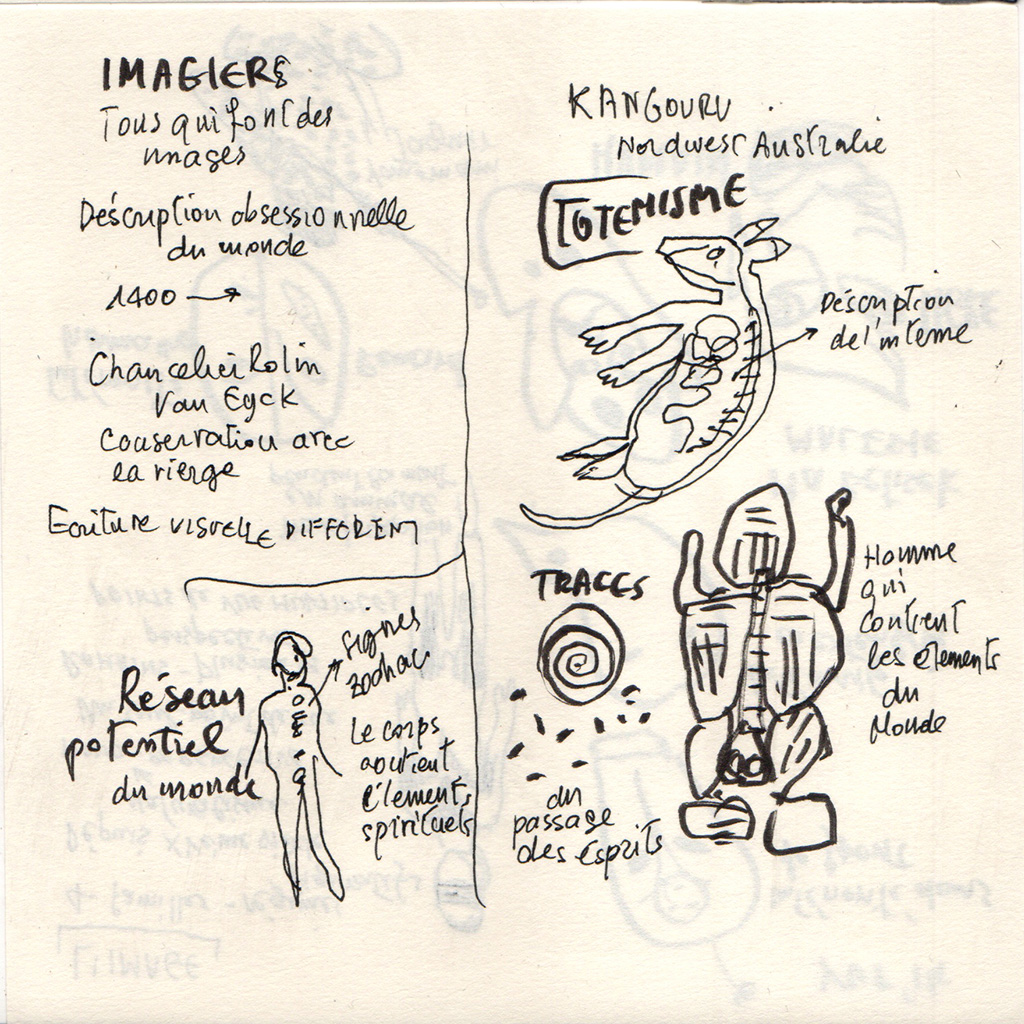
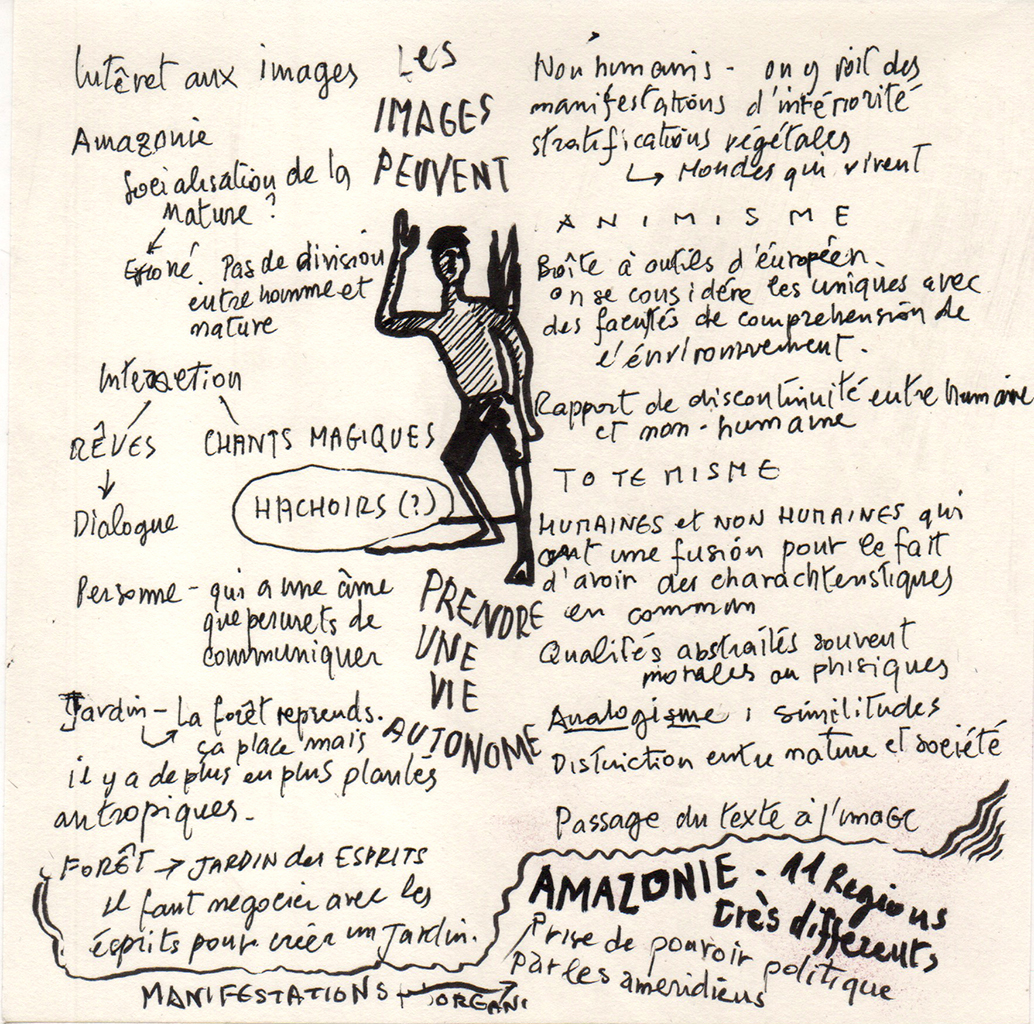
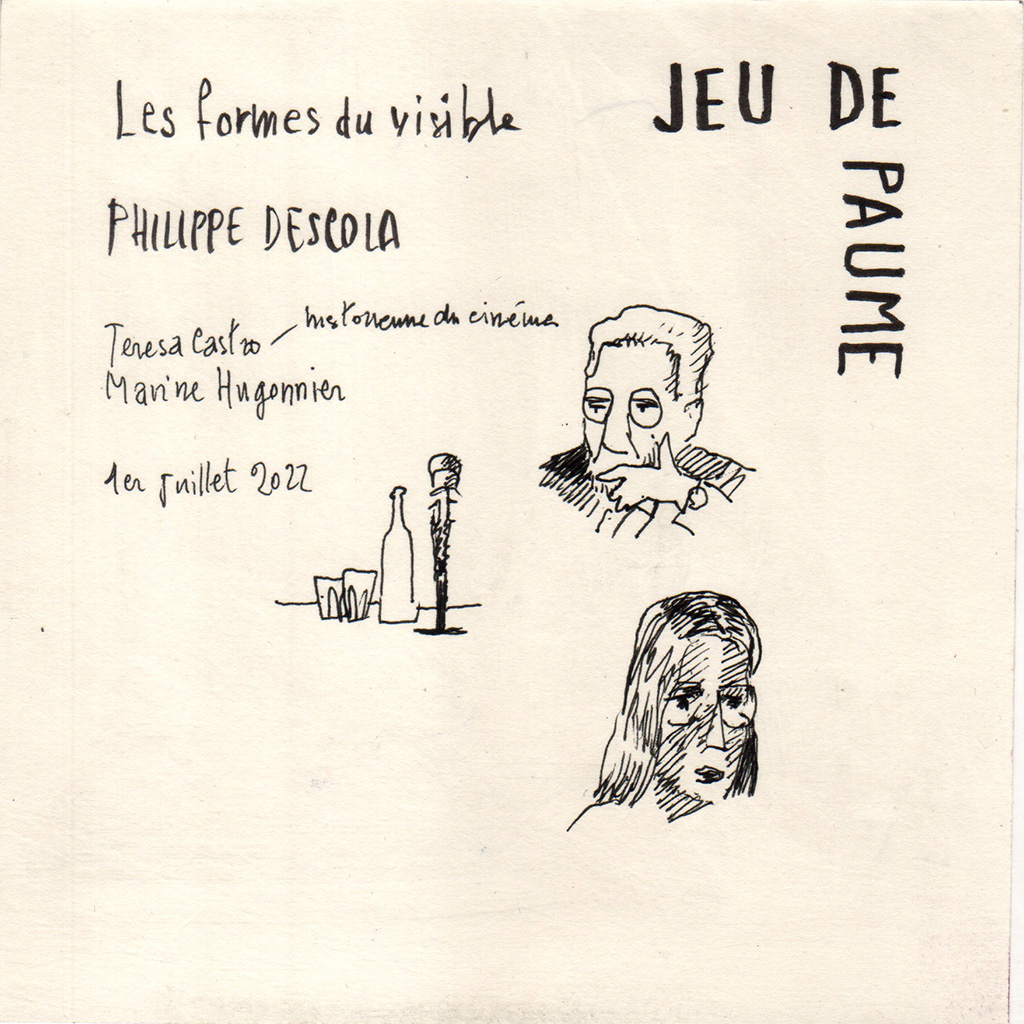
« Les Formes du visible ».
Conférence au Jeu de Paume, Paris, tenue par Philippe Descola, anthropologue, animée par Teresa Castro, en présence de Marine Hugonnier
« La figuration n’est pas tout entière livrée à la fantaisie expressive de ceux qui font des images. On ne figure que ce que l’on perçoit ou imagine, et l’on n’imagine et ne perçoit que ce que l’habitude nous a enseigné à discerner. Le chemin visuel que nous traçons spontanément dans les plis du monde dépend de notre appartenance à l’une des quatre régions de l’archipel ontologique : animisme, naturalisme, totémisme ou analogisme. (…) une anthropologie de la figuration.
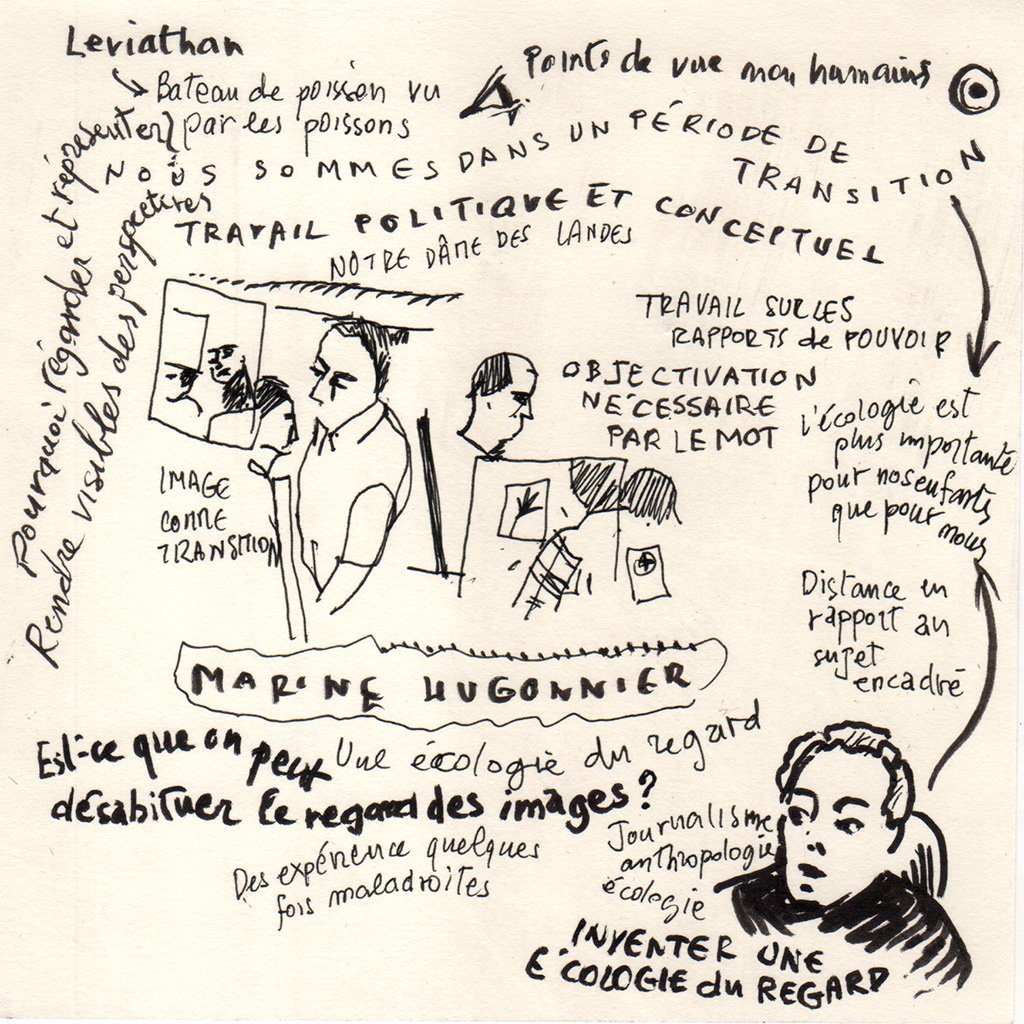

Pour en savoir plus :
https://jeudepaume.org/evenement/conference-les-formes-du-visible/
https://www.seuil.com/ouvrage/les-formes-du-visible-philippe-descola/9782021476989