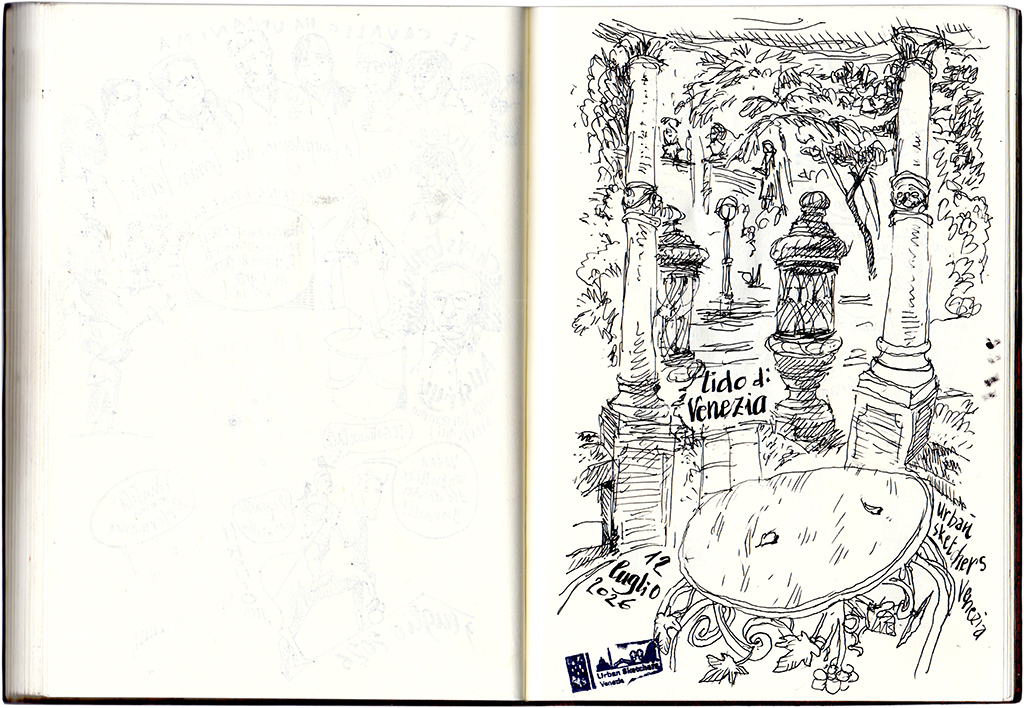
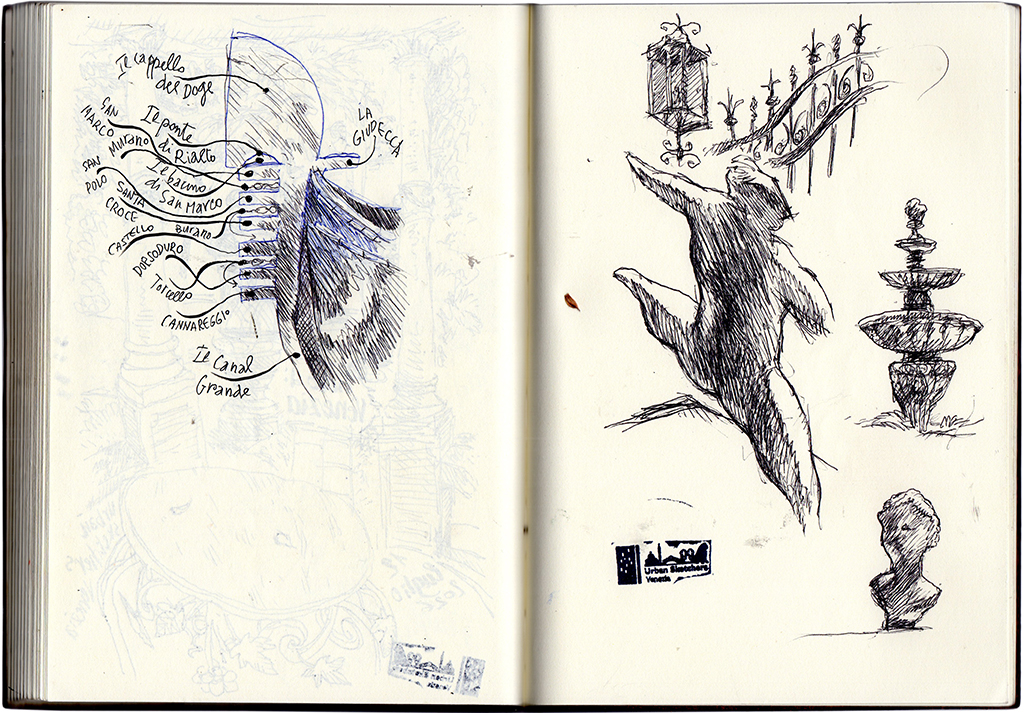
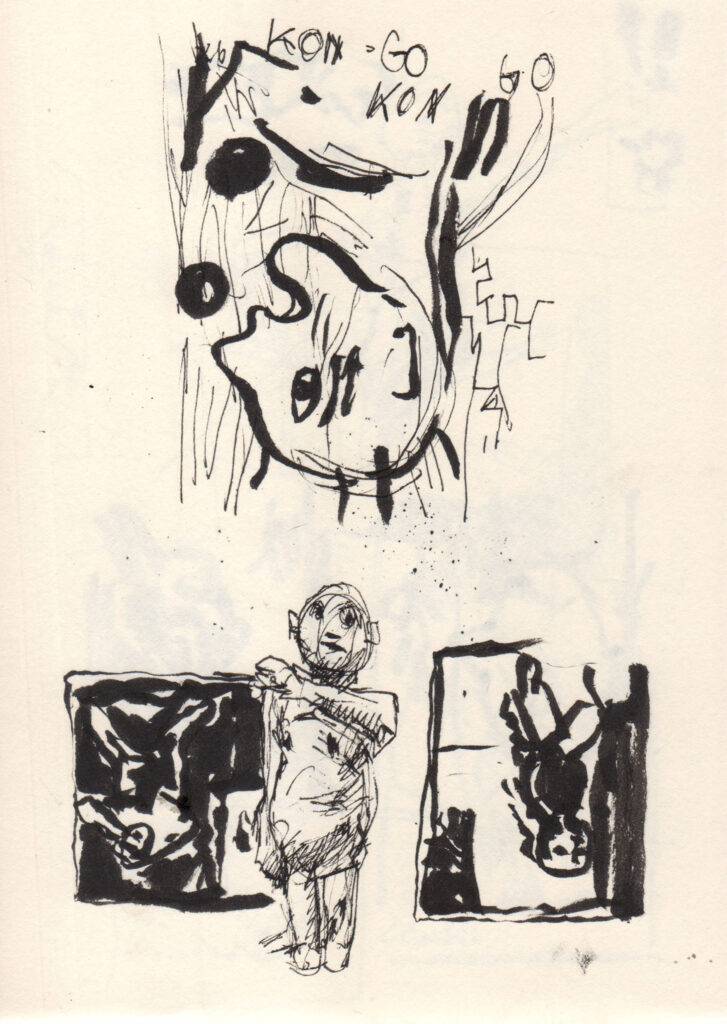
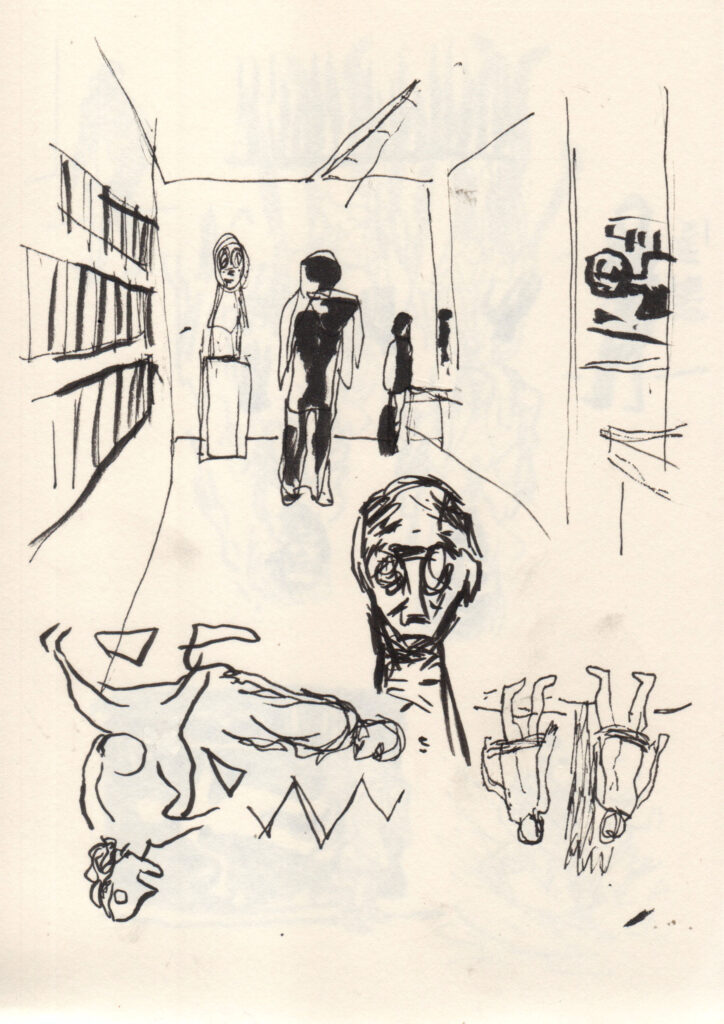
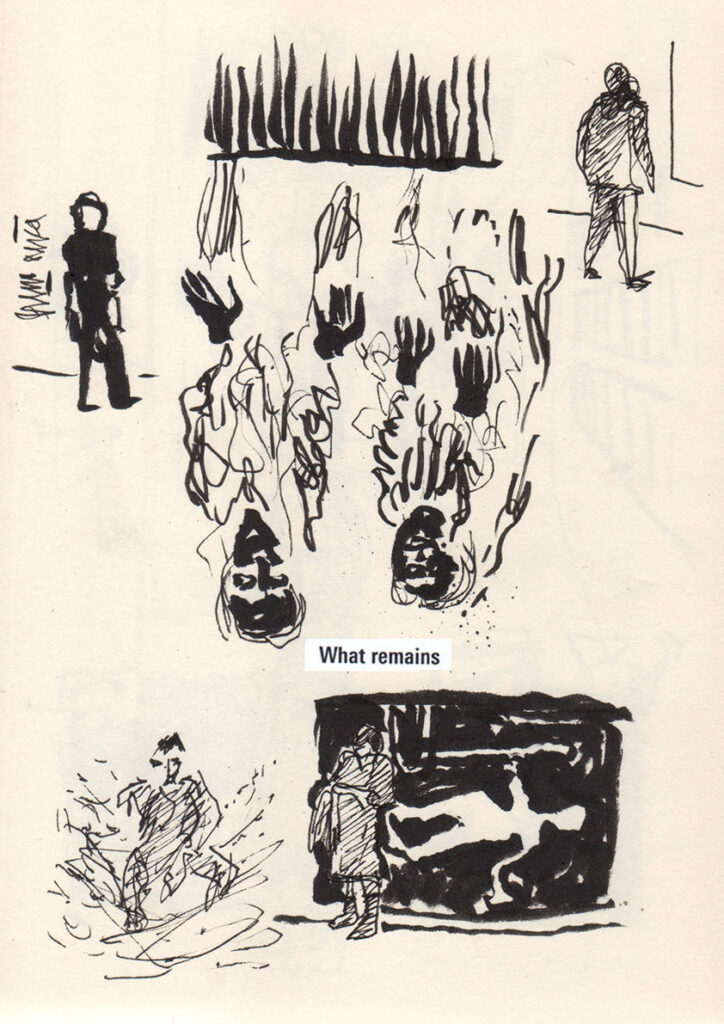
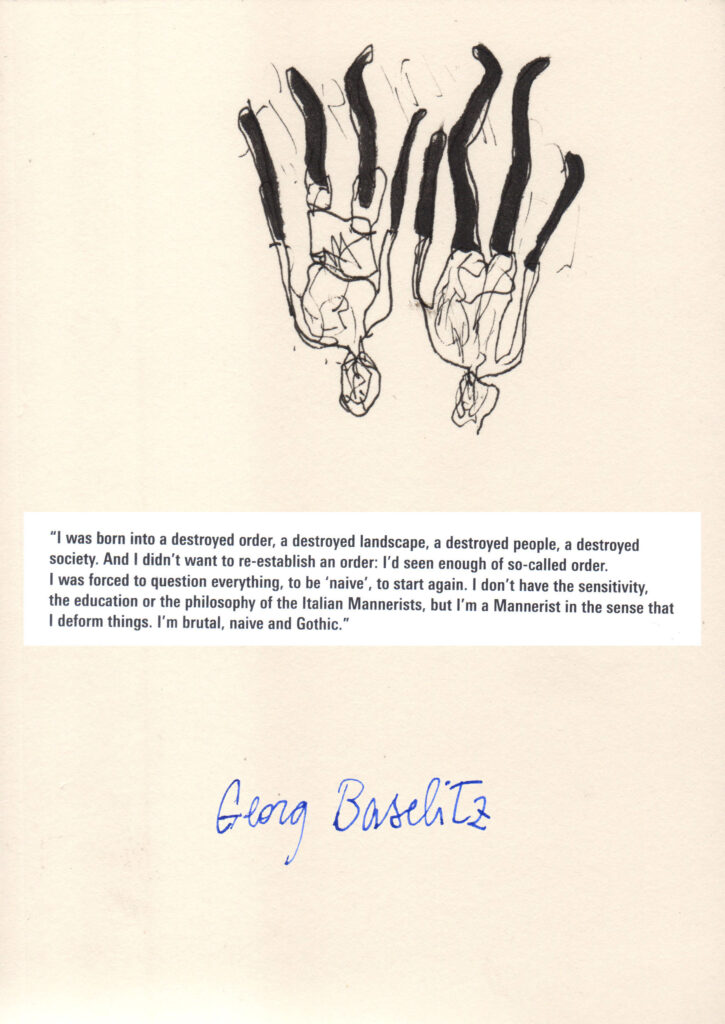
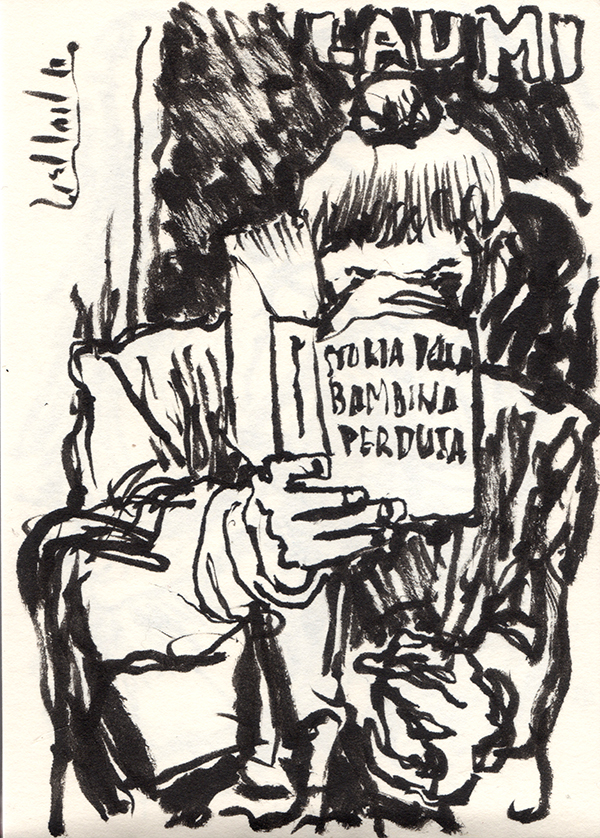
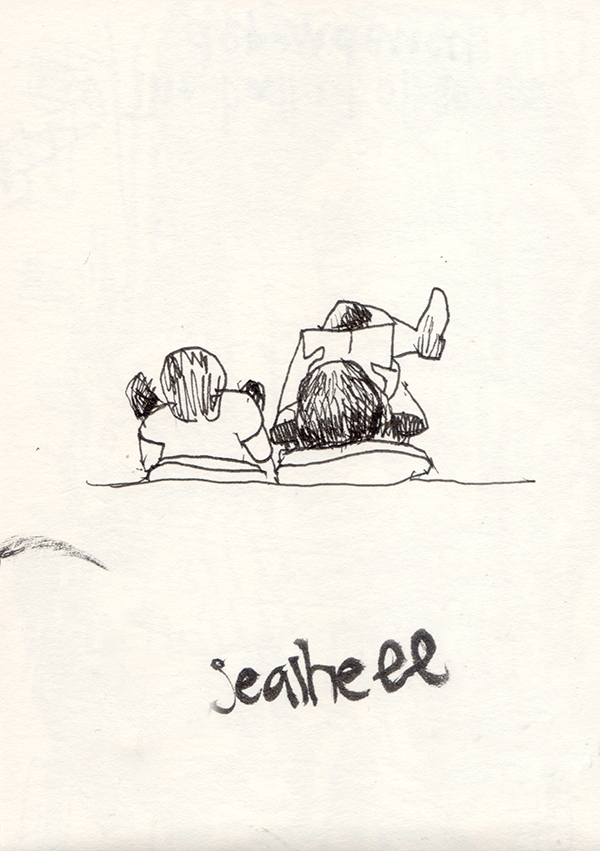
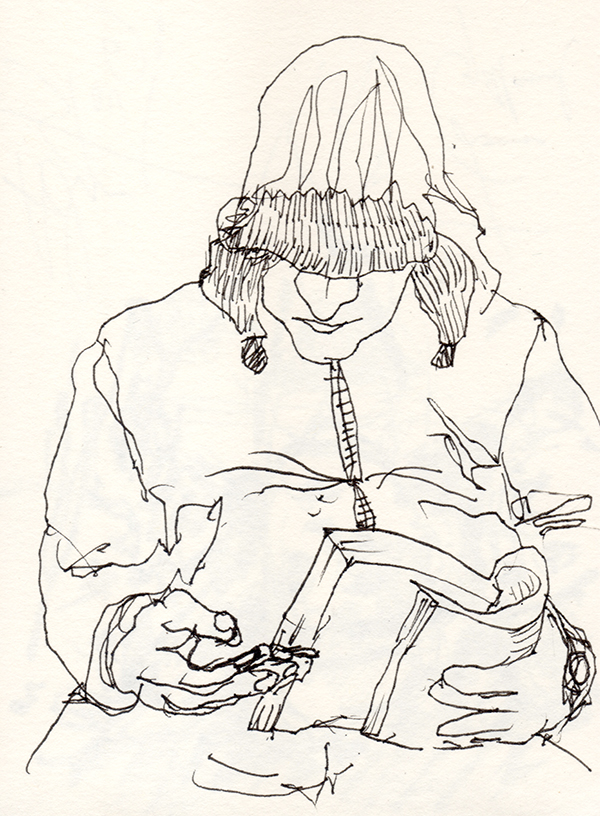
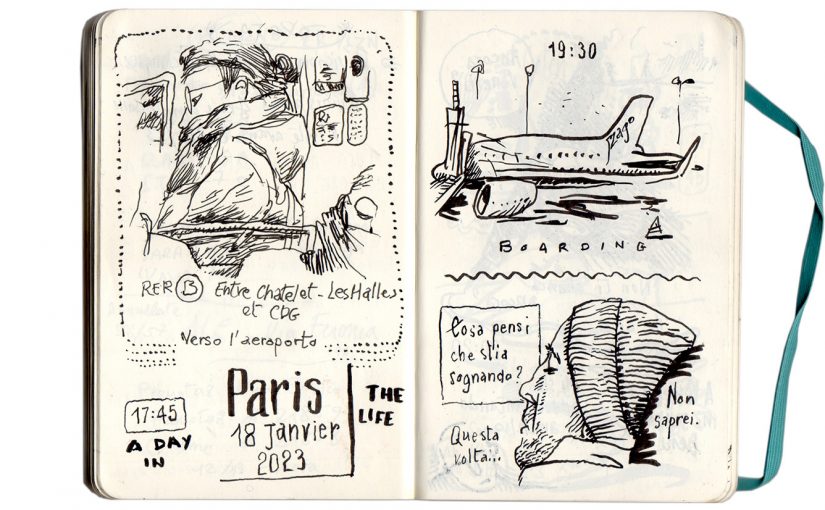
What a pleasure it was to sketch the Hotel Ausonia Hungaria and its Art Nouveau features on the Lido of Venice! But above all, to have sketched as part of a group with the wonderful Venetian Urban Sketchers!
Venice Lido – Hotel Ausonia – 0702026
The bow of a gondola – Venice Lido – Hotel Ausonia – 0702026
In both the analysis of Albert Edelfelt’s work and that of Vincent van Gogh, a style of representation emerges that is linked to the technique employed.
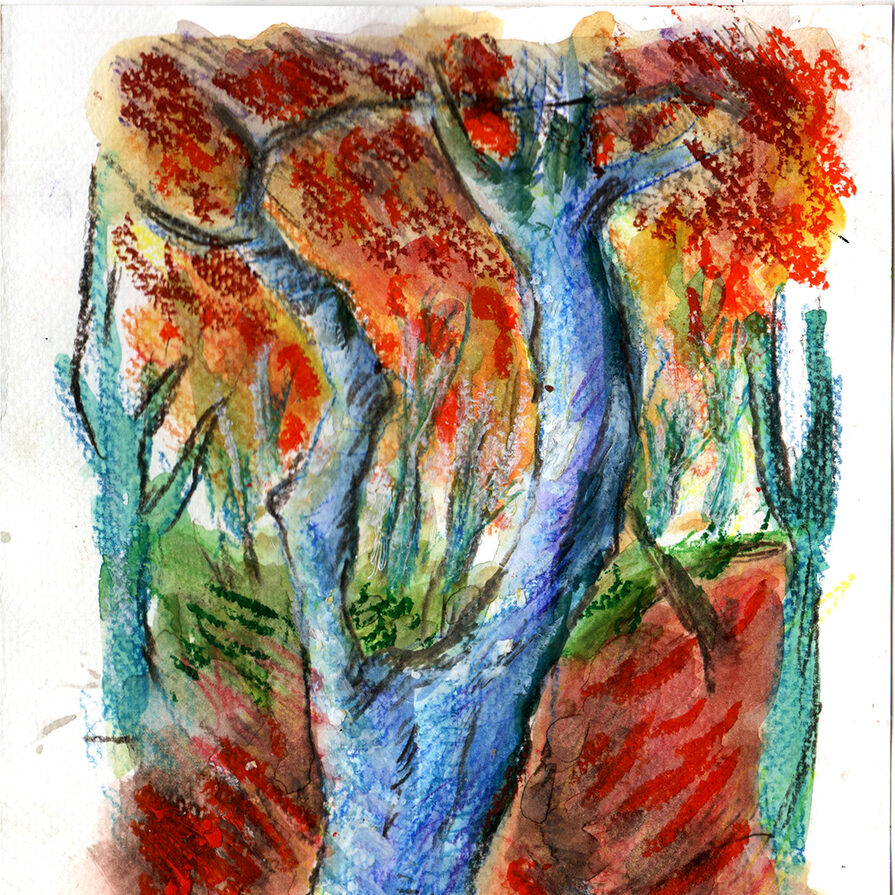
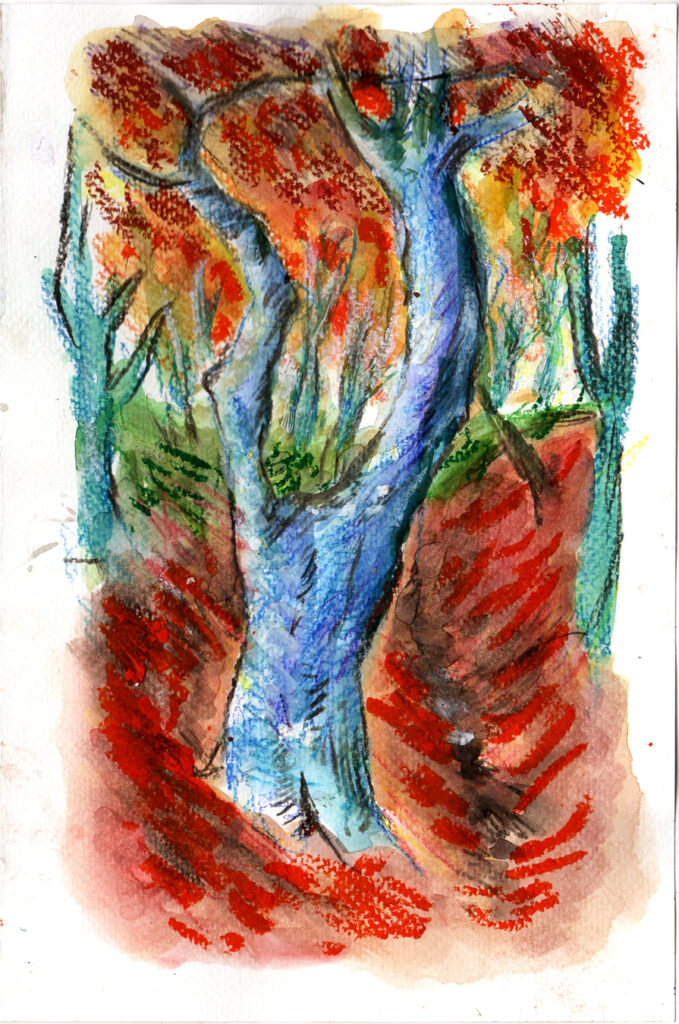
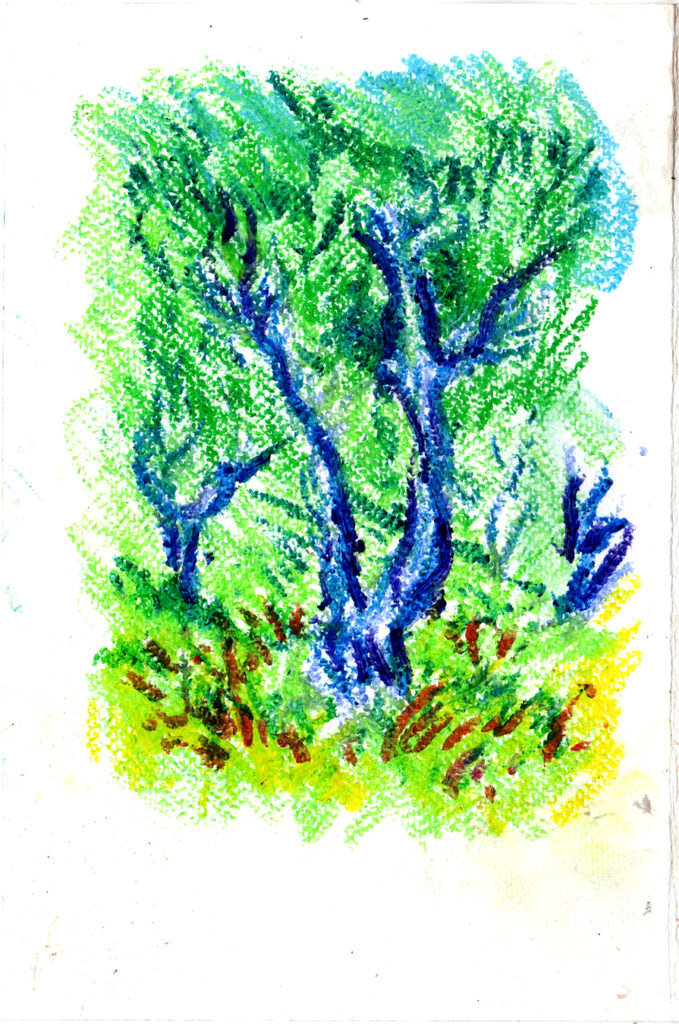
An Analysis of the Works of Albert Edelfelt and Vincent van Gogh. I created two drawings using watercolours and oil pastels during one of the courses I teach in Paris.
In both the analysis of Albert Edelfelt’s work and that of Vincent van Gogh, a style of representation emerges that is linked to the technique employed.
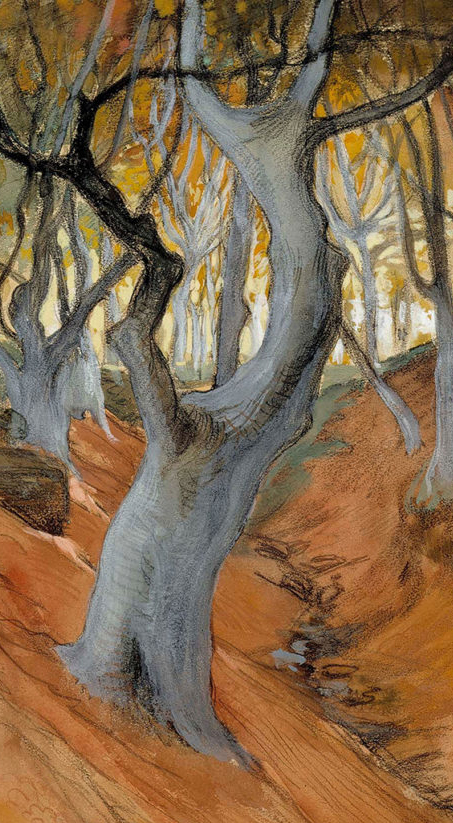
Albert Edelfelt, Pyökkimetsää, 1901, Finnish National Gallery, Helsinki
In the case of A. Edelfelt, the artist began with a graphite drawing, then moved on to watercolour – a transparent medium – before applying opaque touches. This is no easy technique, as one must take care not to apply too much colour to the lighter areas, so as not to obscure them.
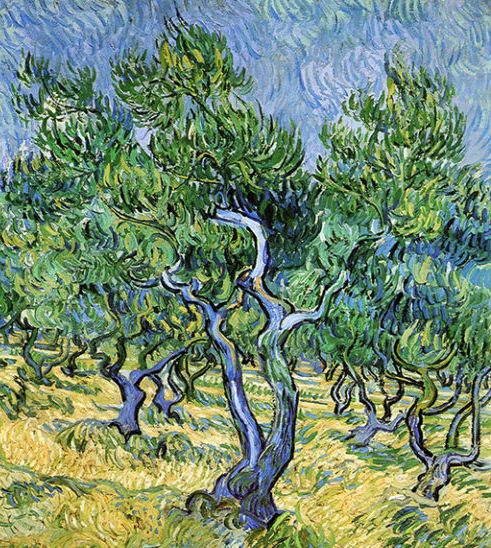
Vincent van Gogh, Olive Trees, 1889, oil on canvas, 72×92 cm, Kröller-Müller Museum, Otterlo
In the case of Van Gogh, who used opaque oil paints, and in my own case, where I use opaque oil pastels we can see how the artist can add light colours by layering them over the tree-like mass created by darker colours. The density of the paint is, in my view, the basis of the uniqueness and modernity of Vincent Van Gogh’s work.
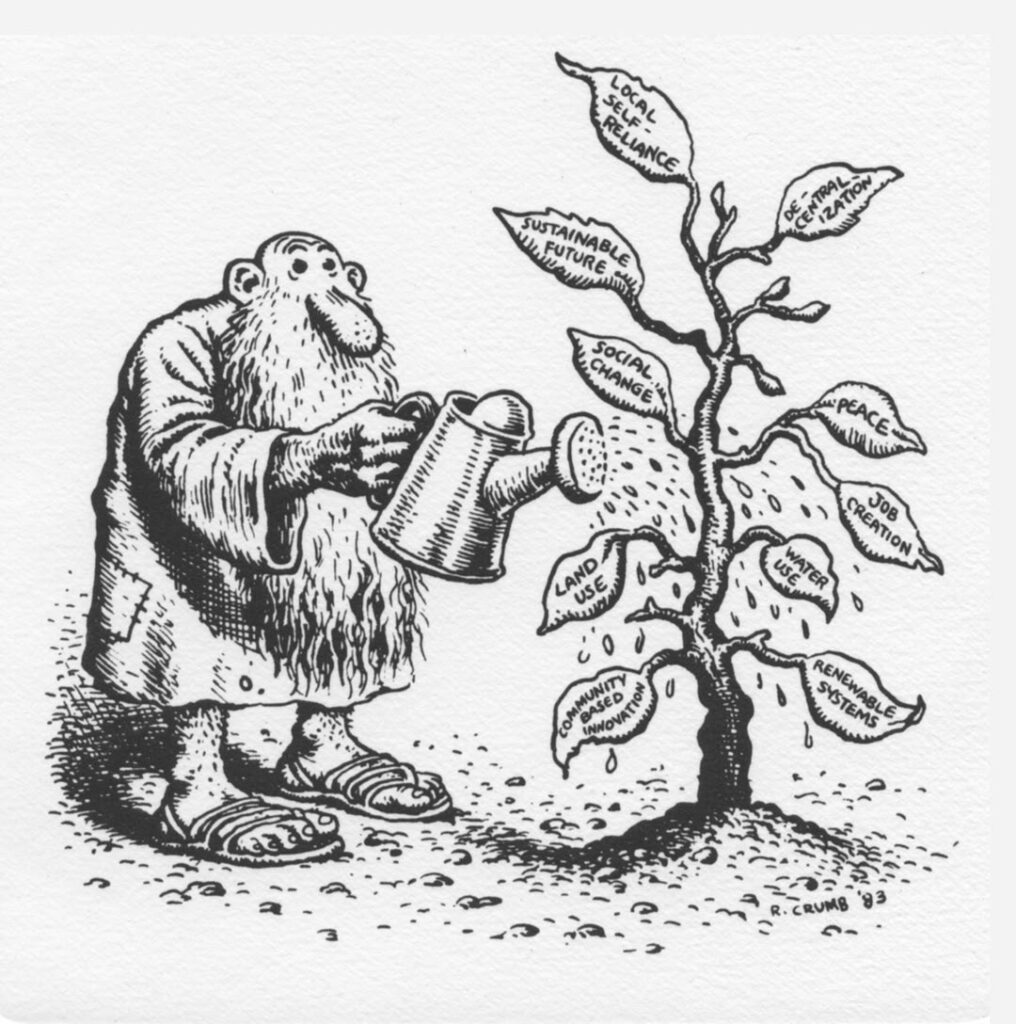
“Local self-reliance, decentralisation, sustainable future, social change, peace, job creation, land use, water use, community based innovation, renewable systems…”. In these dark times, I rediscover this beautiful, hopeful drawing by Robert Crumb. It was 1983, and Mr. Natural already knew which path to take.
“In the early ’80’s, Crumb used to volunteer for a local bi-monthly newspaper Winds of Change (out of Davis, California). His involvement with the newspaper educated him about the important environmental issues at that time, which are, of course, still relevant. But he was way ahead of his time. Here’s a drawing he created of Mr. Natural in ’83.”*
My friend Christophe Austruy says it well, that the figure of the lion of St. Mark in Venice reflects a powerful and warlike character.
Venice’s political and military power (…). The traditional image we have of the lion is in profile, holding an open book. A beautiful, strong, muscular lion… . There are, however, many lions at rest or asleep, like the one sculpted by Canova in the Accademia galleries.
Monumento a Papa Clemente XIII – Leone Dormiente Antonio Canova – 1784
It will be the theme of war and peace, so topical and dramatic, that will engage us for the next year of research. For my part, I will continue to experiment with my research model by drawing the images that we will be analysing together.
*Questo leone dormiente fa parte del progetto di monumento che poi fu realizzato in San Pietro a Roma. Dettagli Titolo: Monumento a Papa Clemente XIII – Leone Dormiente Creatore: Antonio Canova Data: 1784 Data di creazione: 1784 Materiale: gesso
Here I have concluded, not without emotion but with great satisfaction, a year of exciting encounters where I was able to pass on my passion for art history and experiment with drawing techniques in a creative and participatory manner.
Here I have concluded, not without emotion but with great satisfaction, a year of exciting encounters where I was able to pass on my passion for art history and experiment with drawing techniques in a creative and participatory manner. However, the conclusion of my art history courses is a goodbye until my return. There are many side projects that will involve me this summer, the animation of urban sketching workshops and travel sketchbooks, the preparation of an exhibition, experimentation with art books, urban sketching, travel sketchbooks, comics, and the refinement of communication consultancy for the constellation of associations dedicated to the defence of Venice. There will be no boredom!
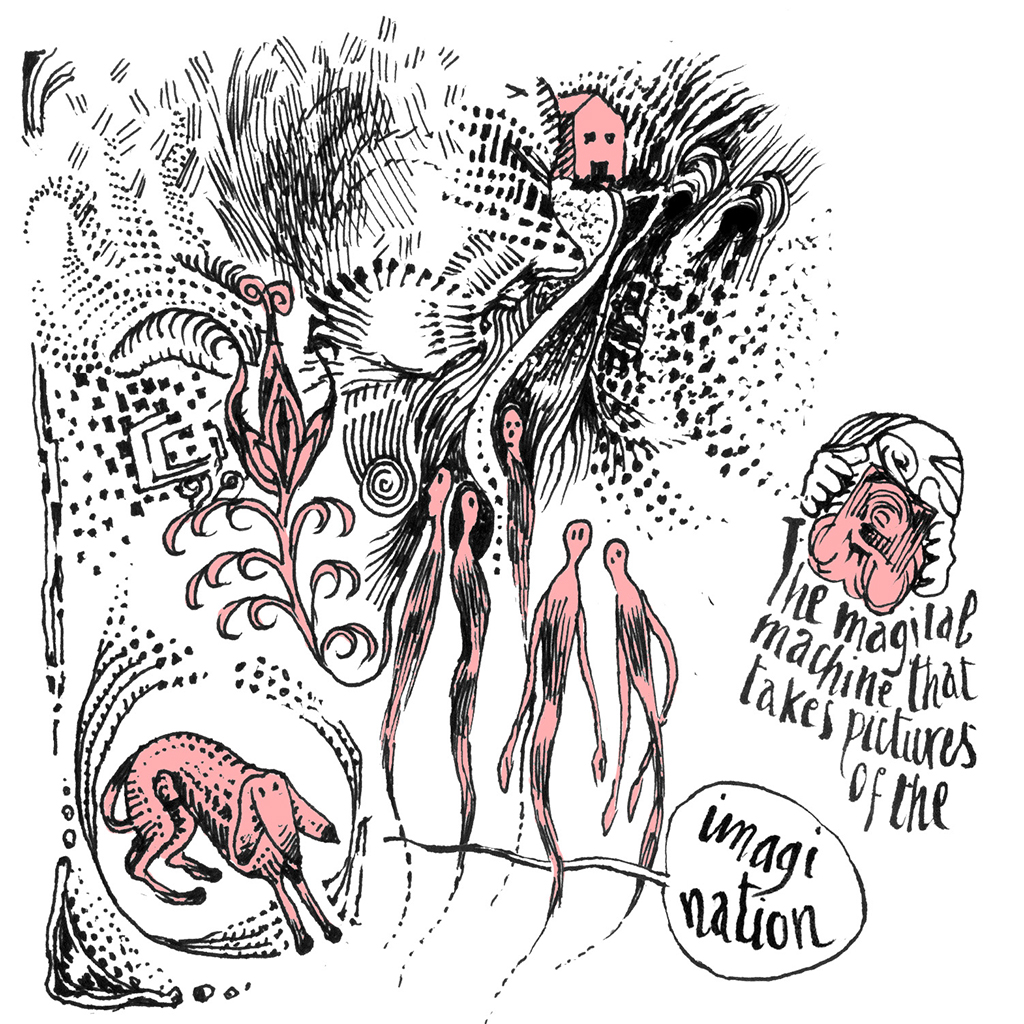
IMAGINATION
Drawing on paper
retouching and computer colour
1024 x 1024 pixels
2025
IMAGINATION Drawing on paper retouching and computer colour 1024 x 1024 pixels 2025
Double experiment: Start from a drawing made instinctively and give it a narrative form Evaluate which visual path is produced by identifying dots produced by a background colour.
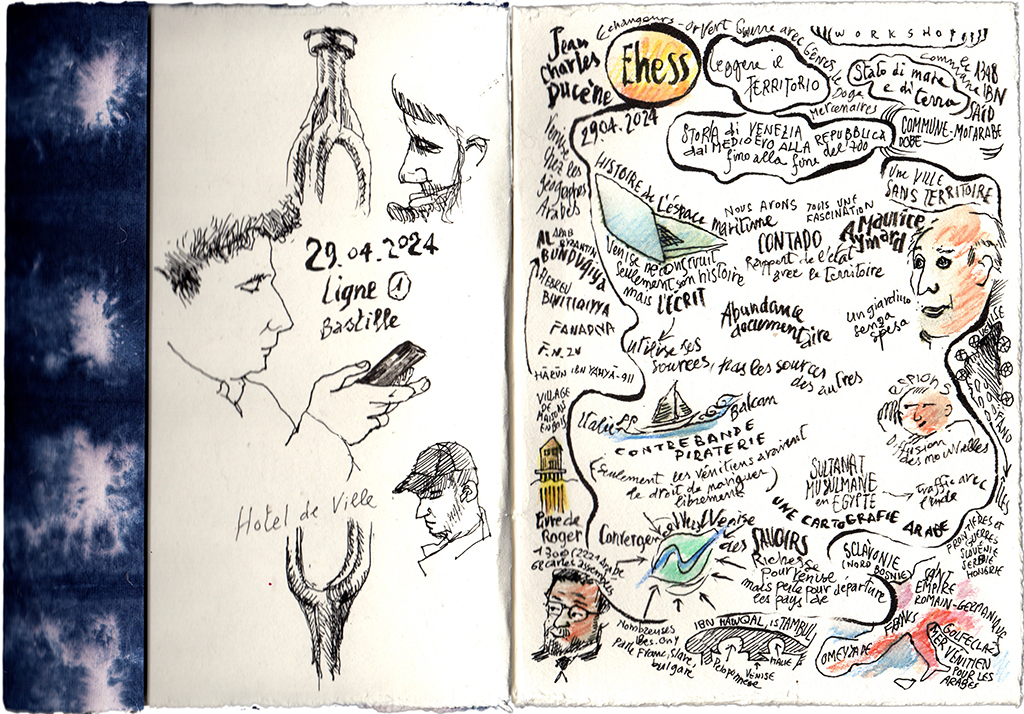
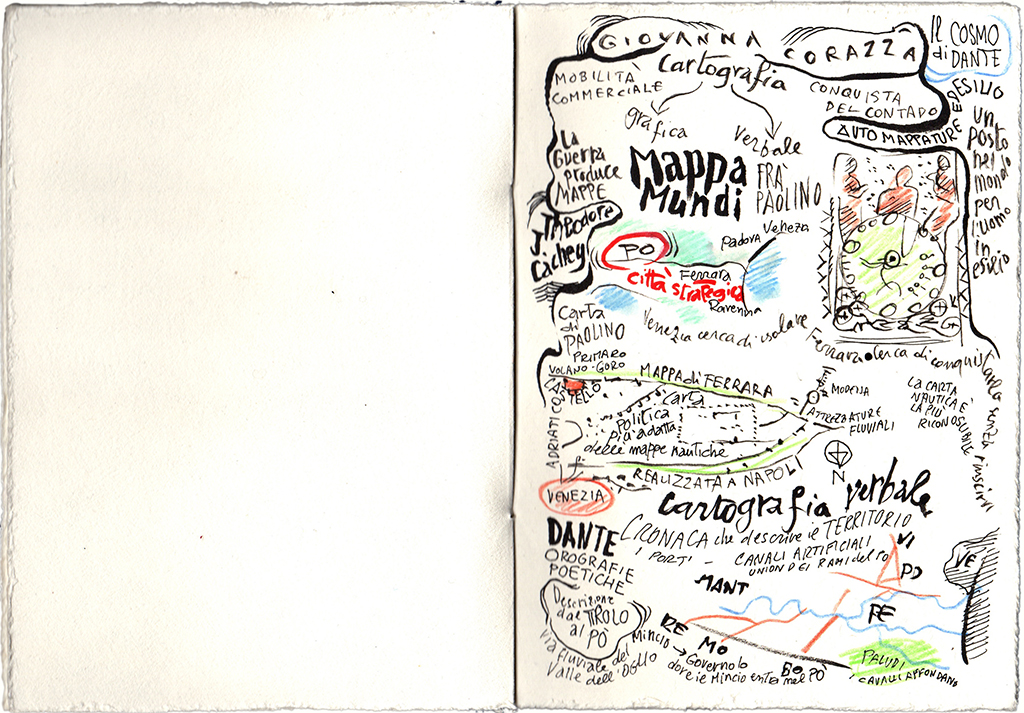
Drawings on watercolor paper Sketchbook Pen, ink, pencils, watercolor 30 x 21 cm 04.2024
Workshop at the EHESS – École des Hautes Études en Sciences Sociales / Centre de Recherches Historiques – Paris
Organisé par Christophe Austruy (EHESS-CNRS, Centre de Recherches Historiques) Giovanna Corazza (Università Ca’ Foscari – Venezia / University of Notre Dame, MSCA Fellow)
Maurice Aymard (EHESS/MSH) : Introduction Jean-Charles Ducène : Venise chez les géographes arabes Nathalie Bouloux : «Il primato di Venezia» dans les études géographiques aux XIVe et XVe siècles Christophe Austruy L’Arsenale Vecchio, l’Arsenale Novo e la Tana nella pianta di Fra’ Paolino. Ipotesi sull’Arsenale di Venezia all’inizio del XIV secolo
Anna Pegoretti A nord di Venezia: Dante cartografo e le Alpi centro-orientali
Theodore J. Cachey Jr. Il cosmo di Dante: automappature ed esilio
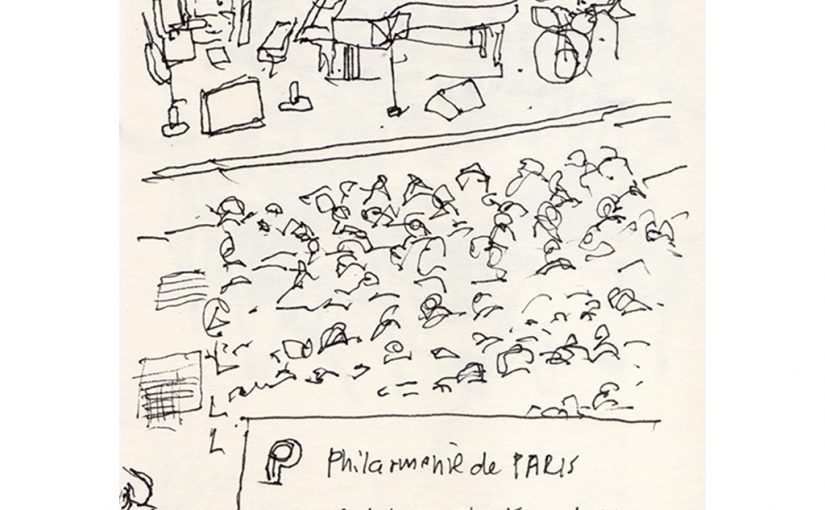
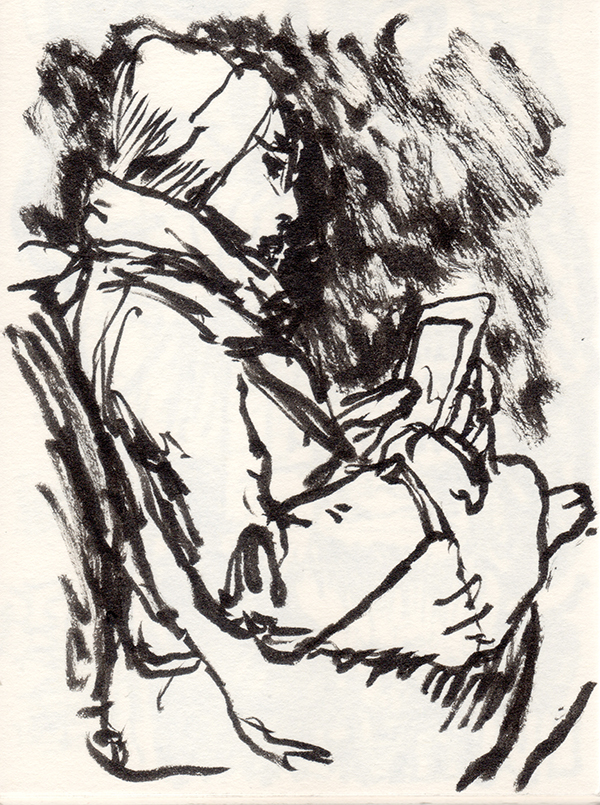
The Ballad of Sexual Dependency Drawings on Sketchbook Pen and Ink 2015
On the occasion of the release of Nan Goldin’s film All the beauty and the bloodshed, I offer these drawings made during the screening at the Philharmonie de Paris in 2015, with music by the Tiger Lillies.
“
The Ballad of Sexual Dependency, made between 1979 and 1986, is one of Nan Goldin’s earliest photographic series, but remains today, and rightly so, the best known of all her works. The slide show projected on a large screen is accompanied by the Tiger Lillies. A London musical trio, they are dark, provocative and blasphemous, grimacing with their Brechtian inspiration which fits perfectly with the images. The Ballad of Sexual Dependency is a masterpiece, an authentic chronicle of modern times.
“*
Nan Goldin, fotography
The Tiger Lillies Martyn Jacques, Adrian Stout, Jonas Golland
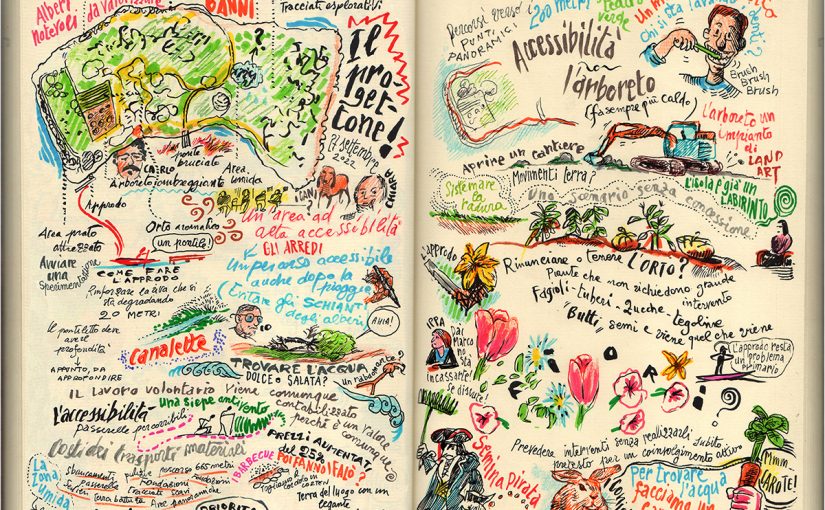
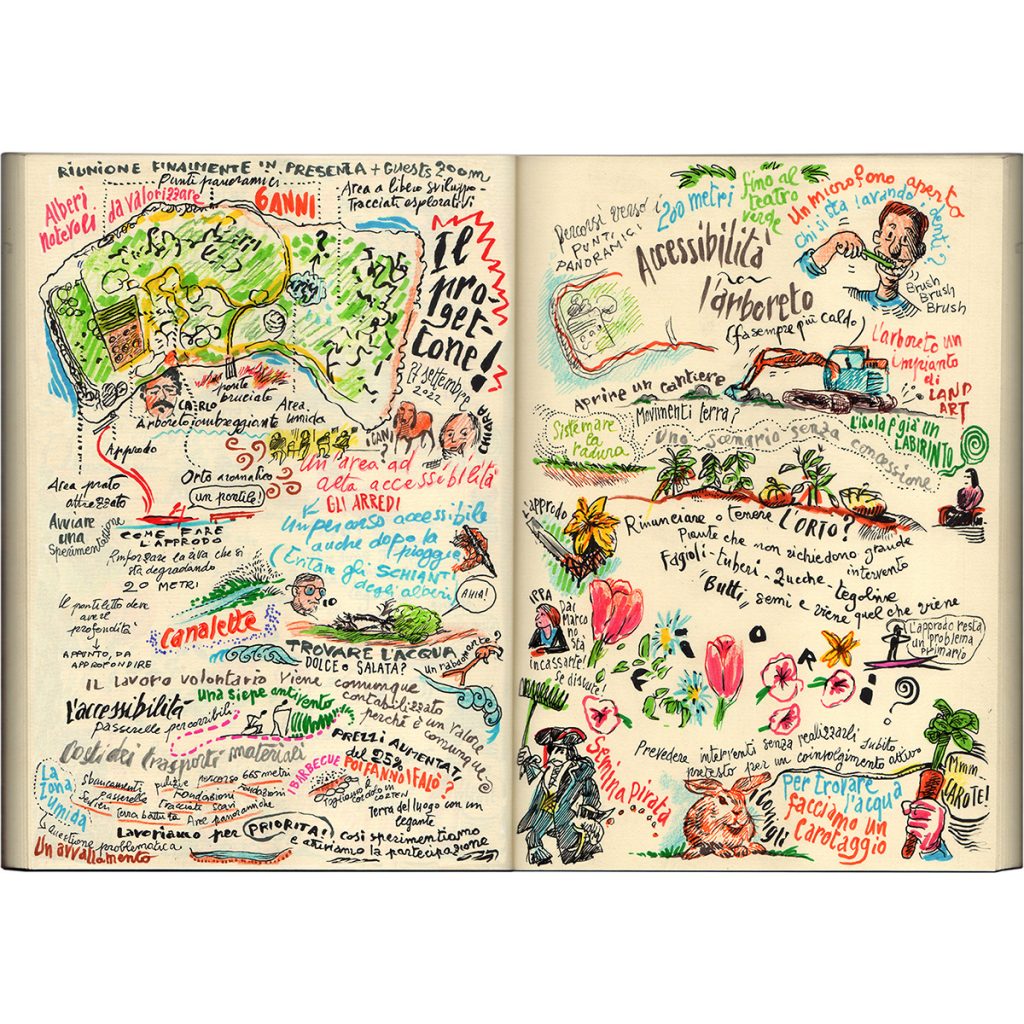
POVEGLIA – the “great project” 2022 Pens on paper (Carnet)
It’s not over, quite the contrary. After the wonderful Festival delle Arti Giudecca, Sacca Fisola that will forever remain in my heart as a magnificent memory, the work continues. Until an important turning point, the discussion on the completed draft of the urban park project on the island of Poveglia. Long and difficult discussion among the tireless people of Poveglia Per Tutti, but nothing is left to chance. We will go all the way and we will not give up Poveglia.
Gérer le consentement aux cookies
Pour offrir les meilleures expériences, nous utilisons des technologies telles que les cookies pour stocker et/ou accéder aux informations des appareils. Le fait de consentir à ces technologies nous permettra de traiter des données telles que le comportement de navigation ou les ID uniques sur ce site. Le fait de ne pas consentir ou de retirer son consentement peut avoir un effet négatif sur certaines caractéristiques et fonctions.
Fonctionnel
Always active
Le stockage ou l’accès technique est strictement nécessaire dans la finalité d’intérêt légitime de permettre l’utilisation d’un service spécifique explicitement demandé par l’abonné ou l’internaute, ou dans le seul but d’effectuer la transmission d’une communication sur un réseau de communications électroniques.
Préférences
Le stockage ou l’accès technique est nécessaire dans la finalité d’intérêt légitime de stocker des préférences qui ne sont pas demandées par l’abonné ou la personne utilisant le service.
Statistiques
Le stockage ou l’accès technique qui est utilisé exclusivement à des fins statistiques.Le stockage ou l’accès technique qui est utilisé exclusivement dans des finalités statistiques anonymes. En l’absence d’une assignation à comparaître, d’une conformité volontaire de la part de votre fournisseur d’accès à internet ou d’enregistrements supplémentaires provenant d’une tierce partie, les informations stockées ou extraites à cette seule fin ne peuvent généralement pas être utilisées pour vous identifier.
Marketing
Le stockage ou l’accès technique est nécessaire pour créer des profils d’internautes afin d’envoyer des publicités, ou pour suivre l’internaute sur un site web ou sur plusieurs sites web ayant des finalités marketing similaires.