An Analysis of the Works of Albert Edelfelt and Vincent van Gogh.
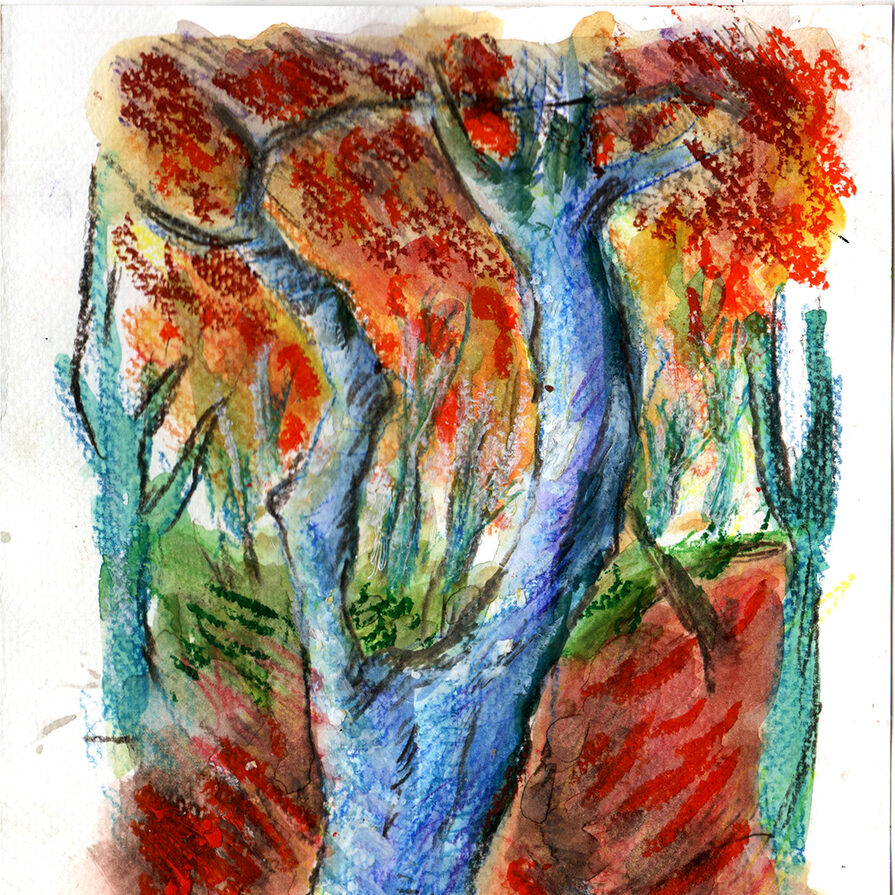
I created two drawings using watercolours and oil pastels during one of the courses I teach in Paris.
In both the analysis of Albert Edelfelt’s work and that of Vincent van Gogh, a style of representation emerges that is linked to the technique employed.
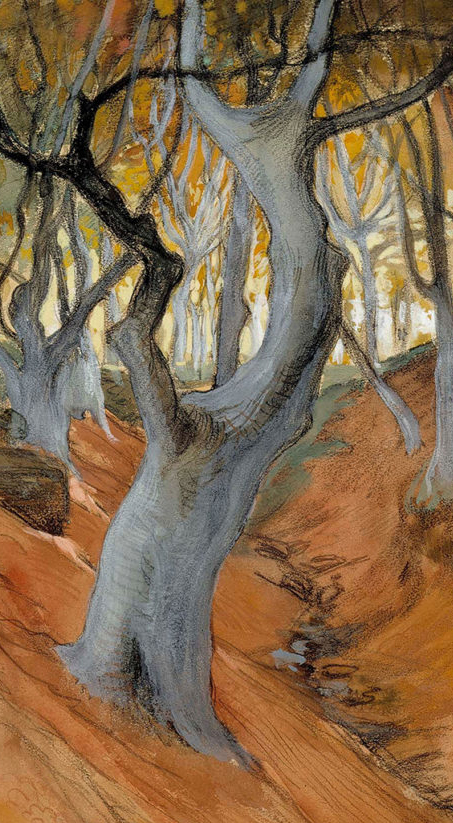
In the case of A. Edelfelt, the artist began with a graphite drawing, then moved on to watercolour – a transparent medium – before applying opaque touches. This is no easy technique, as one must take care not to apply too much colour to the lighter areas, so as not to obscure them.
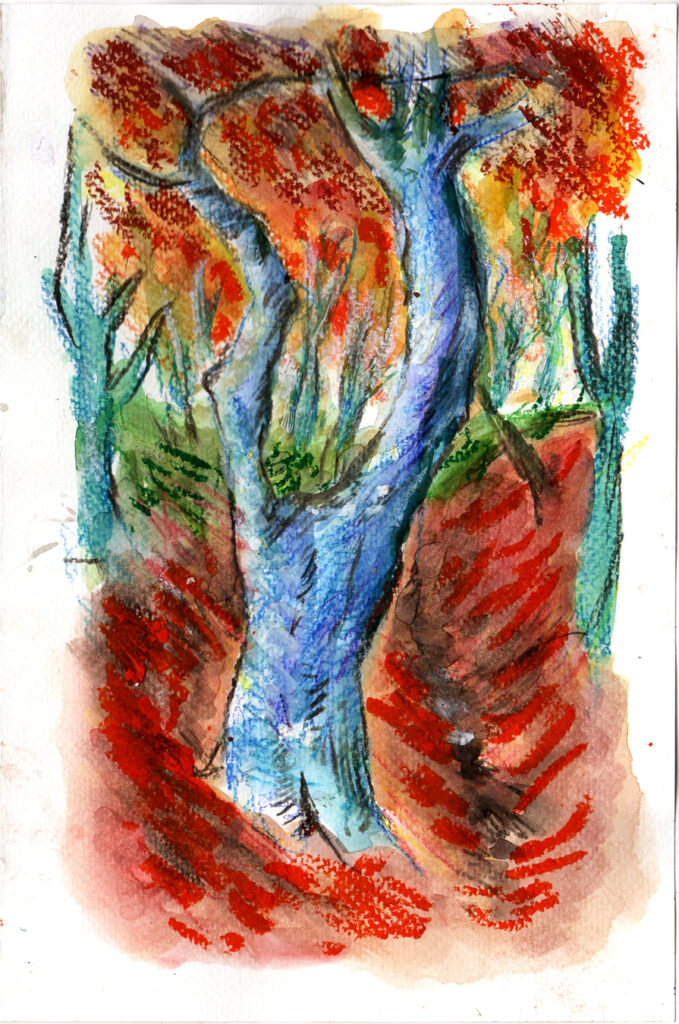
© Stefano Zago – Tree in the Forest
Study of Albert Edelfelt’s artwork, Pyökkimetsää, 1901, Finnish National Gallery, Helsinki
Watercolour and oil pastels on paper
16 x 24 cm
2026
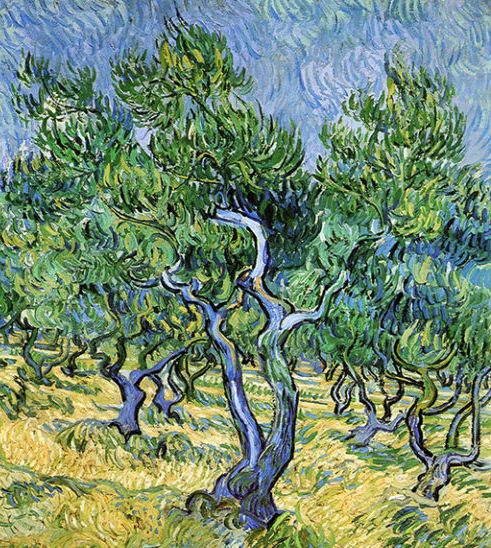
In the case of Van Gogh, who used opaque oil paints, and in my own case, where I use opaque oil pastels we can see how the artist can add light colours by layering them over the tree-like mass created by darker colours.
The density of the paint is, in my view, the basis of the uniqueness and modernity of Vincent Van Gogh’s work.
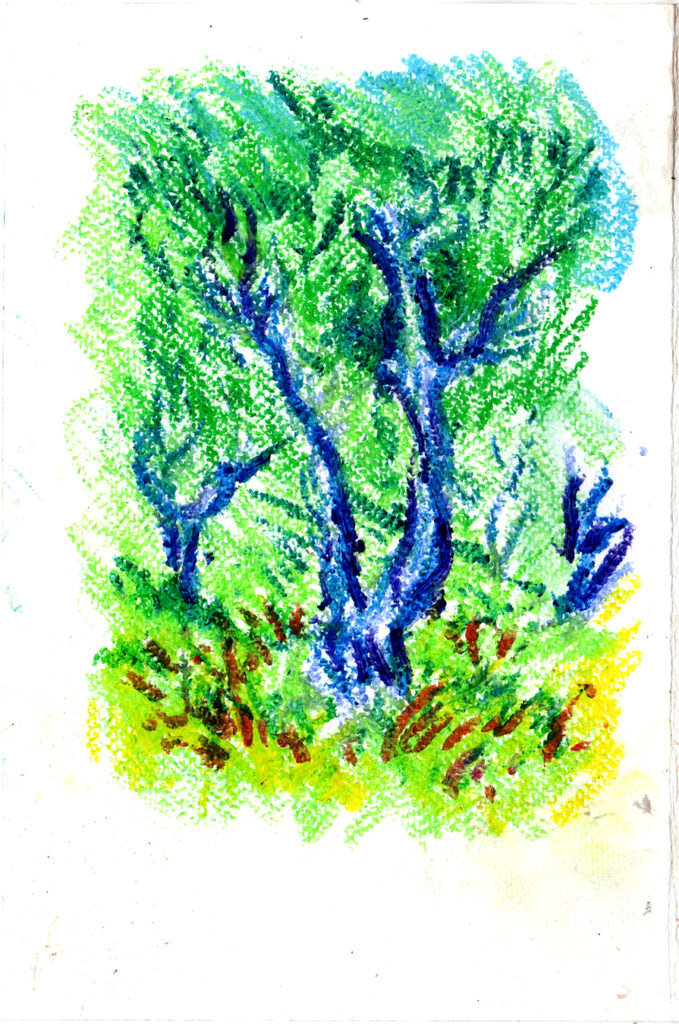
© Stefano Zago – Olive Trees
Study based on Vincent van Gogh’s work, “Oliviers”, 1889, oil on canvas, 72 × 92 cm, Kröller-Müller Museum, Otterlo
Oil pastels on paper
16 x 24 cm
2026