THE DRAWN HISTORY OF ART – Trees in their own space

In both the analysis of Albert Edelfelt’s work and that of Vincent van Gogh, a style of representation emerges that is linked to the technique employed.
An Analysis of the Works of Albert Edelfelt and Vincent van Gogh.
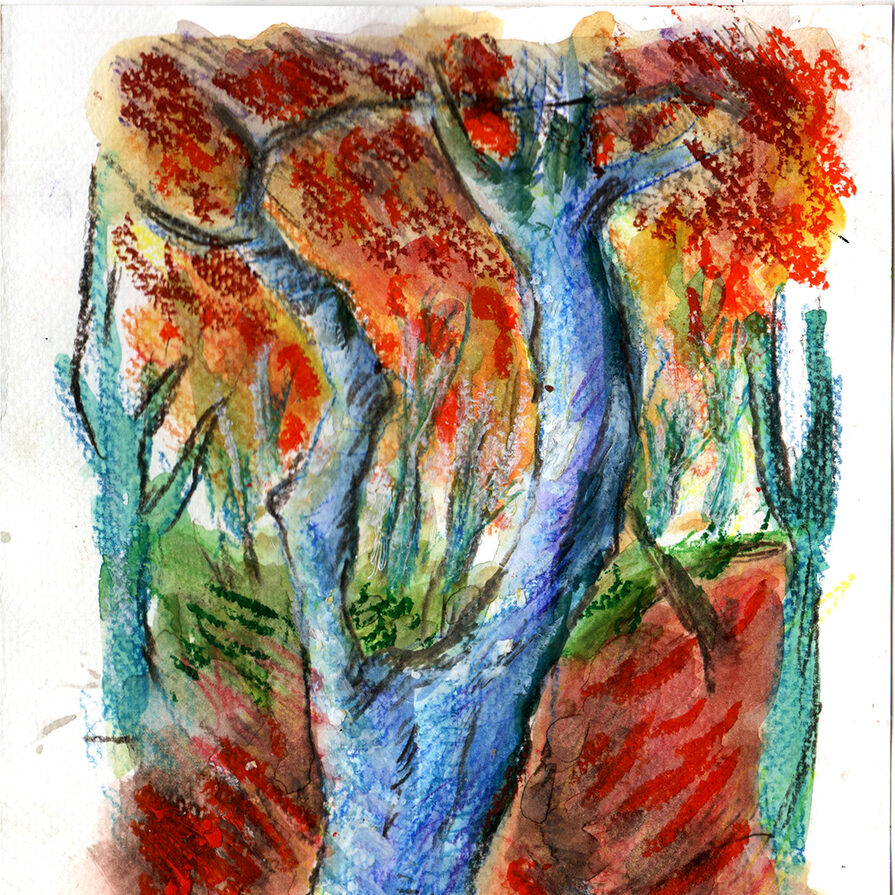
I created two drawings using watercolours and oil pastels during one of the courses I teach in Paris.

In both the analysis of Albert Edelfelt’s work and that of Vincent van Gogh, a style of representation emerges that is linked to the technique employed.

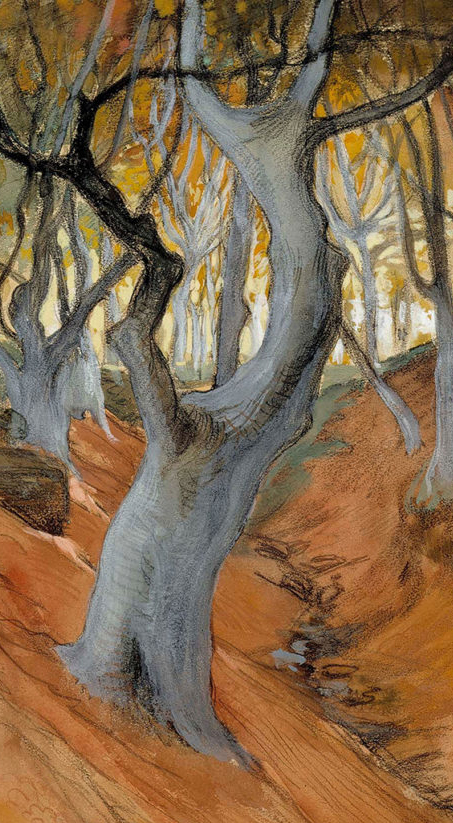
Albert Edelfelt, Pyökkimetsää, 1901, Finnish National Gallery, Helsinki


In the case of A. Edelfelt, the artist began with a graphite drawing, then moved on to watercolour – a transparent medium – before applying opaque touches. This is no easy technique, as one must take care not to apply too much colour to the lighter areas, so as not to obscure them.
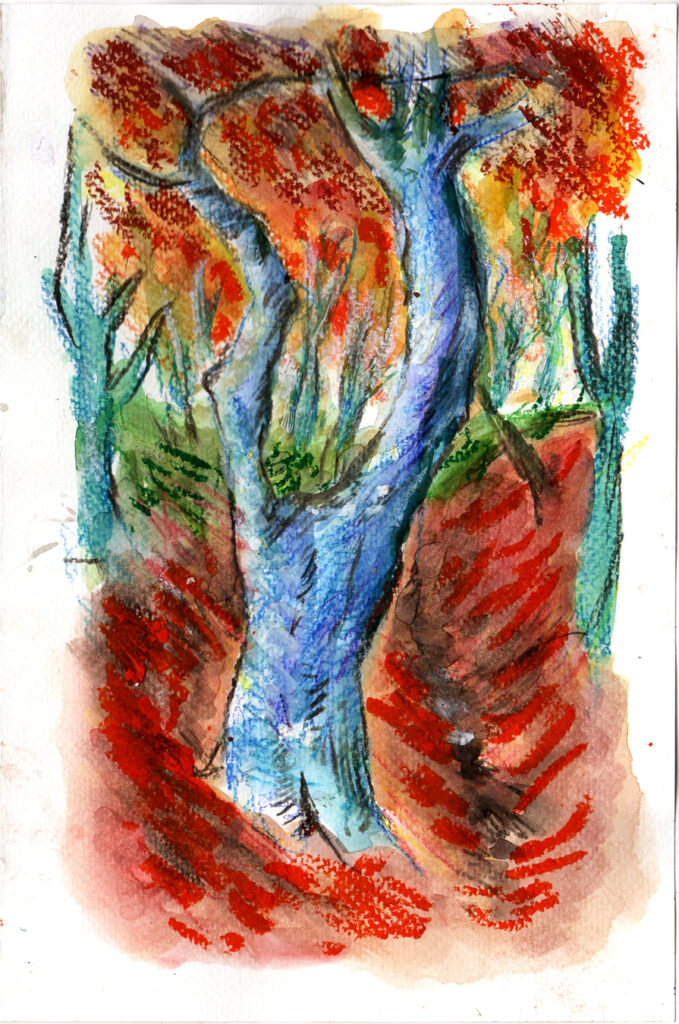
My artwork. Time taken: 20 minutes
© Stefano Zago – Tree in the Forest
Study of Albert Edelfelt’s artwork, Pyökkimetsää, 1901, Finnish National Gallery, Helsinki
Watercolour and oil pastels on paper
16 x 24 cm
2026
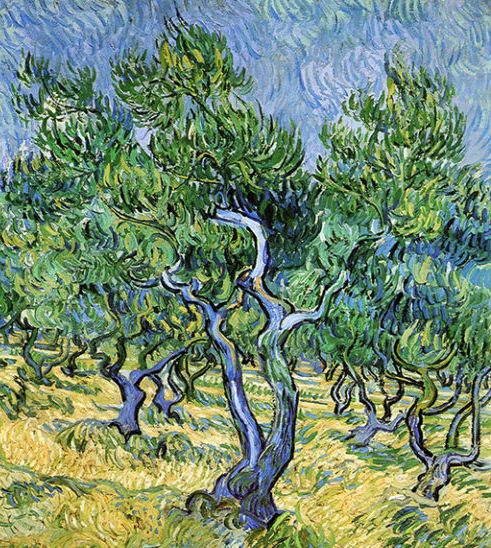
Vincent van Gogh, Olive Trees, 1889, oil on canvas, 72×92 cm, Kröller-Müller Museum, Otterlo

In the case of Van Gogh, who used opaque oil paints, and in my own case, where I use opaque oil pastels we can see how the artist can add light colours by layering them over the tree-like mass created by darker colours.
The density of the paint is, in my view, the basis of the uniqueness and modernity of Vincent Van Gogh’s work.
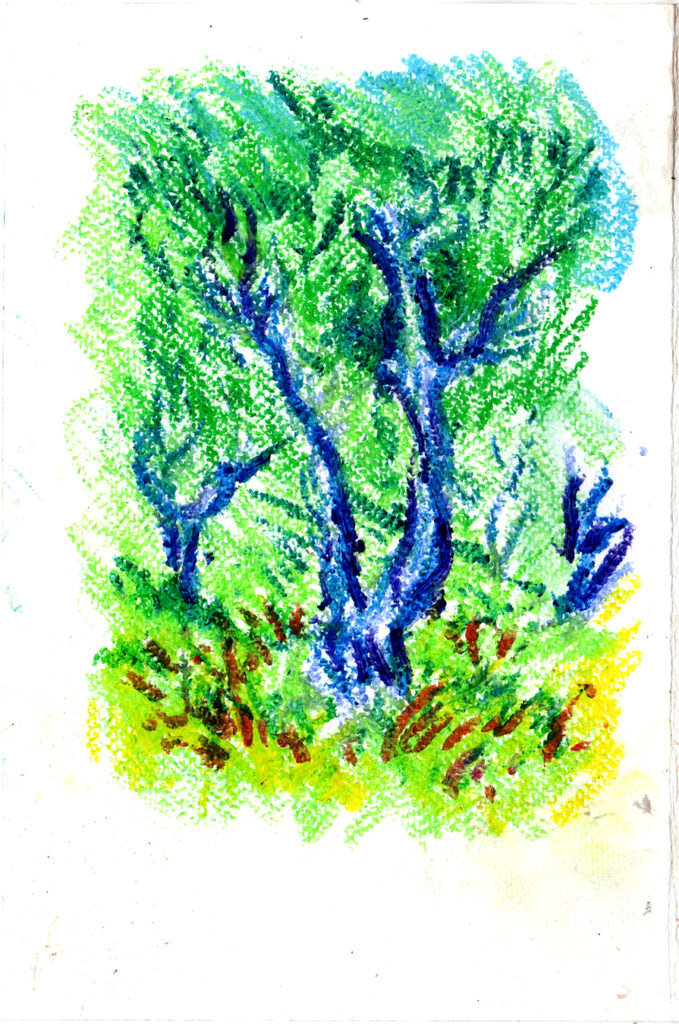
My artwork. Time taken: 10 minutes
© Stefano Zago – Olive Trees
Study based on Vincent van Gogh’s work, “Oliviers”, 1889, oil on canvas, 72 × 92 cm, Kröller-Müller Museum, Otterlo
Oil pastels on paper
16 x 24 cm
2026

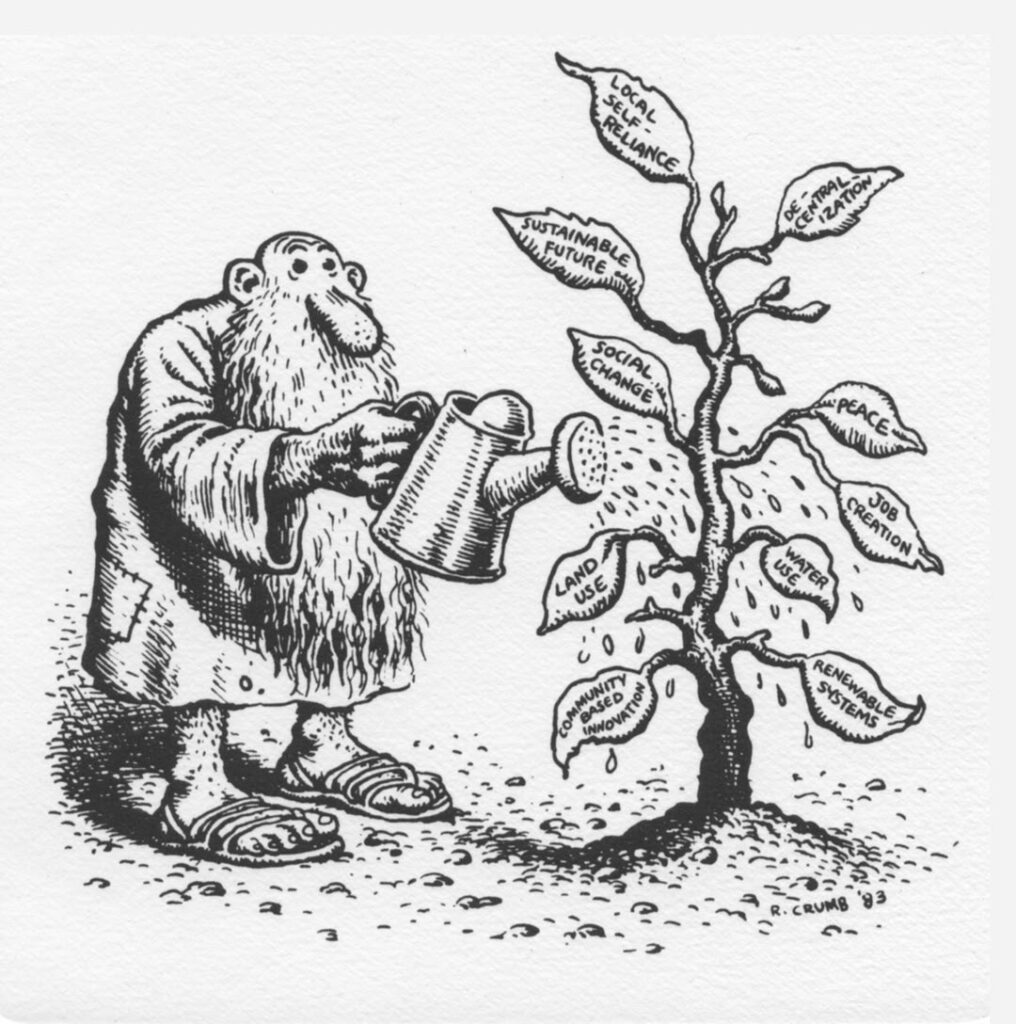
Robert Crumb’s Wind of Change

“Local self-reliance, decentralisation, sustainable future, social change, peace, job creation, land use, water use, community based innovation, renewable systems…”. In these dark times, I rediscover this beautiful, hopeful drawing by Robert Crumb. It was 1983, and Mr. Natural already knew which path to take.

© Robert Crumb – from Facebook
https://www.facebook.com/OFFICIALROBERTCRUMB

“In the early ’80’s, Crumb used to volunteer for a local bi-monthly newspaper Winds of Change (out of Davis, California). His involvement with the newspaper educated him about the important environmental issues at that time, which are, of course, still relevant. But he was way ahead of his time. Here’s a drawing he created of Mr. Natural in ’83.”*

* https://www.facebook.com/OFFICIALROBERTCRUMB

Lions of war and lions of peace

My friend Christophe Austruy says it well, that the figure of the lion of St. Mark in Venice reflects a powerful and warlike character.

Venice’s political and military power (…). The traditional image we have of the lion is in profile, holding an open book. A beautiful, strong, muscular lion… . There are, however, many lions at rest or asleep, like the one sculpted by Canova in the Accademia galleries.

Monumento a Papa Clemente XIII – Leone Dormiente
Antonio Canova – 1784

I, too, was inspired by this peaceful, but always alert, version in my sketchbook made at EHESS – Ecole des Hautes Etudes en Sciences Sociales last year and which I am preparing for an edition. 

Stefano Zago
fron the EHESS sketchbook – 2025

It will be the theme of war and peace, so topical and dramatic, that will engage us for the next year of research. For my part, I will continue to experiment with my research model by drawing the images that we will be analysing together.


*Questo leone dormiente fa parte del progetto di monumento che poi fu realizzato in San Pietro a Roma.
Dettagli
Titolo: Monumento a Papa Clemente XIII – Leone Dormiente
Creatore: Antonio Canova
Data: 1784
Data di creazione: 1784
Materiale: gesso

*Image: Gypsotheca e Museo Antonio Canova

DRAWN ART HISTORY – Another year of workshops concluded.

Here I have concluded, not without emotion but with great satisfaction, a year of exciting encounters where I was able to pass on my passion for art history and experiment with drawing techniques in a creative and participatory manner.

Here I have concluded, not without emotion but with great satisfaction, a year of exciting encounters where I was able to pass on my passion for art history and experiment with drawing techniques in a creative and participatory manner.
However, the conclusion of my art history courses is a goodbye until my return. There are many side projects that will involve me this summer, the animation of urban sketching workshops and travel sketchbooks, the preparation of an exhibition, experimentation with art books, urban sketching, travel sketchbooks, comics, and the refinement of communication consultancy for the constellation of associations dedicated to the defence of Venice. There will be no boredom!

L’histoire de l’art dessinée – 2024-25